The Arts and Sciences Mezzotints
Reproduction and reinvention on paper and glass
The Turner House Collection holds two eighteenth-century reverse-glass pictures depicting Painting and Architecture, subjects associated with a wider allegorical series known as the Arts and Sciences. Acquired from different dealers, the two objects preserve an unexpected material clue: matching inventory labels on their backs.
The arts, sciences and the eighteenth-century Enlightenment
Allegories of Painting, Architecture, Astronomy and related disciplines gave visible form to ideas central to the eighteenth-century Enlightenment: the cultivation of knowledge, disciplined observation, practical skill, artistic invention and the improvement of society through learning. These pictures made intellectual pursuits recognizable through personifications, instruments, books, buildings and other attributes.
Such imagery was not simply a manifesto for modern science. It also drew upon much older traditions of allegory, classical learning and the liberal arts. Its appearance in commercially produced mezzotints, and in decorative pictures intended for display behind glass, suggests how these ideals could circulate beyond scholarly institutions into the domestic and commercial visual culture of the period.
This is an interpretation of the series’ historical cultural setting, not evidence that a particular purchaser held a specific philosophical belief or that the publisher explicitly advertised these prints as “Enlightenment” pictures.
Painting and Architecture: the surviving glass pictures
These photographs document two eighteenth-century coloured reverse-glass mezzotint pictures in the Turner House Collection. Both belong to the Arts and Sciences allegorical tradition, which connected artistic and technical achievement with learning and the cultivation of knowledge. The exact publication chronology and relationship between the paper and glass versions remain subjects of research.
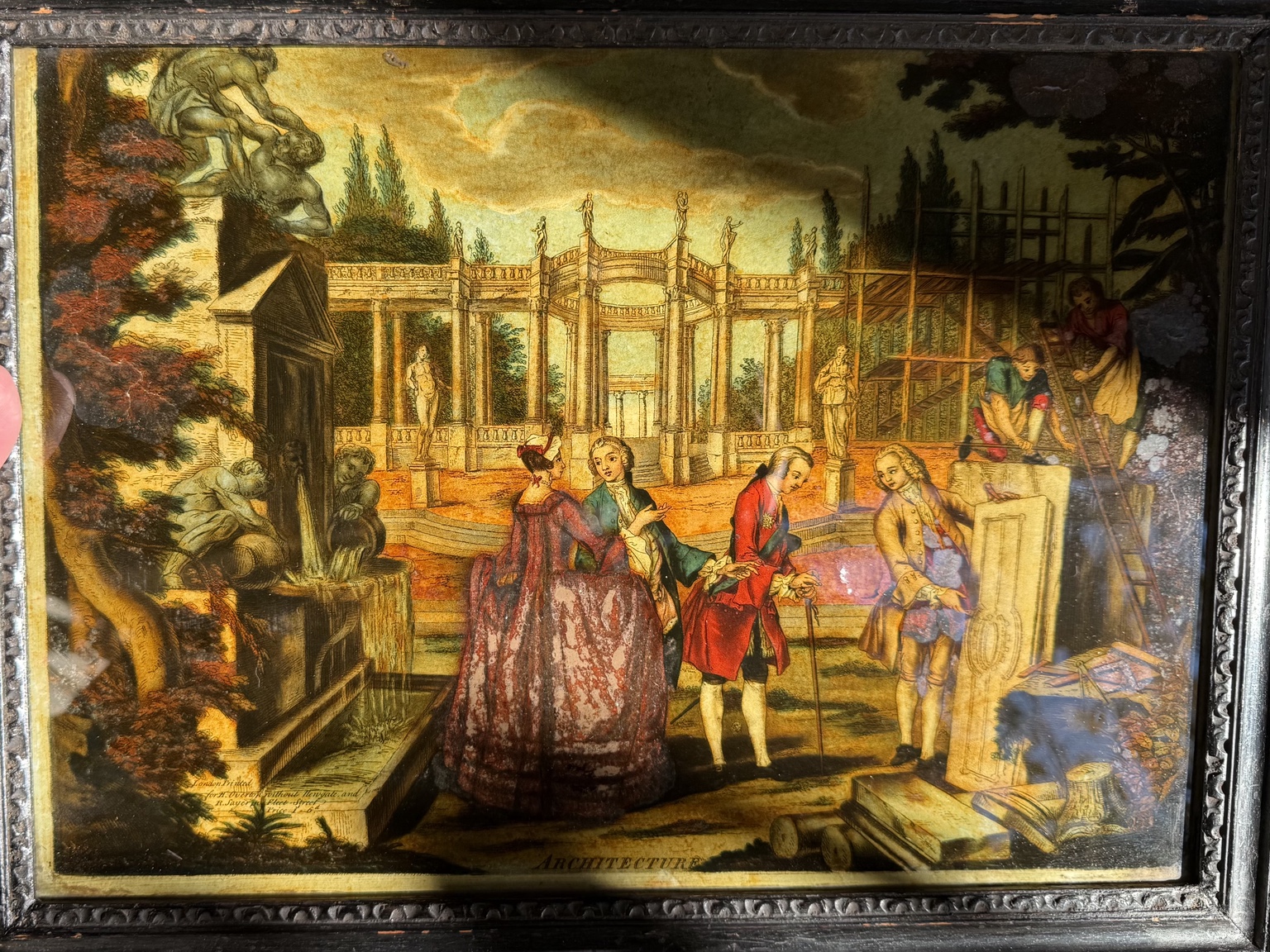
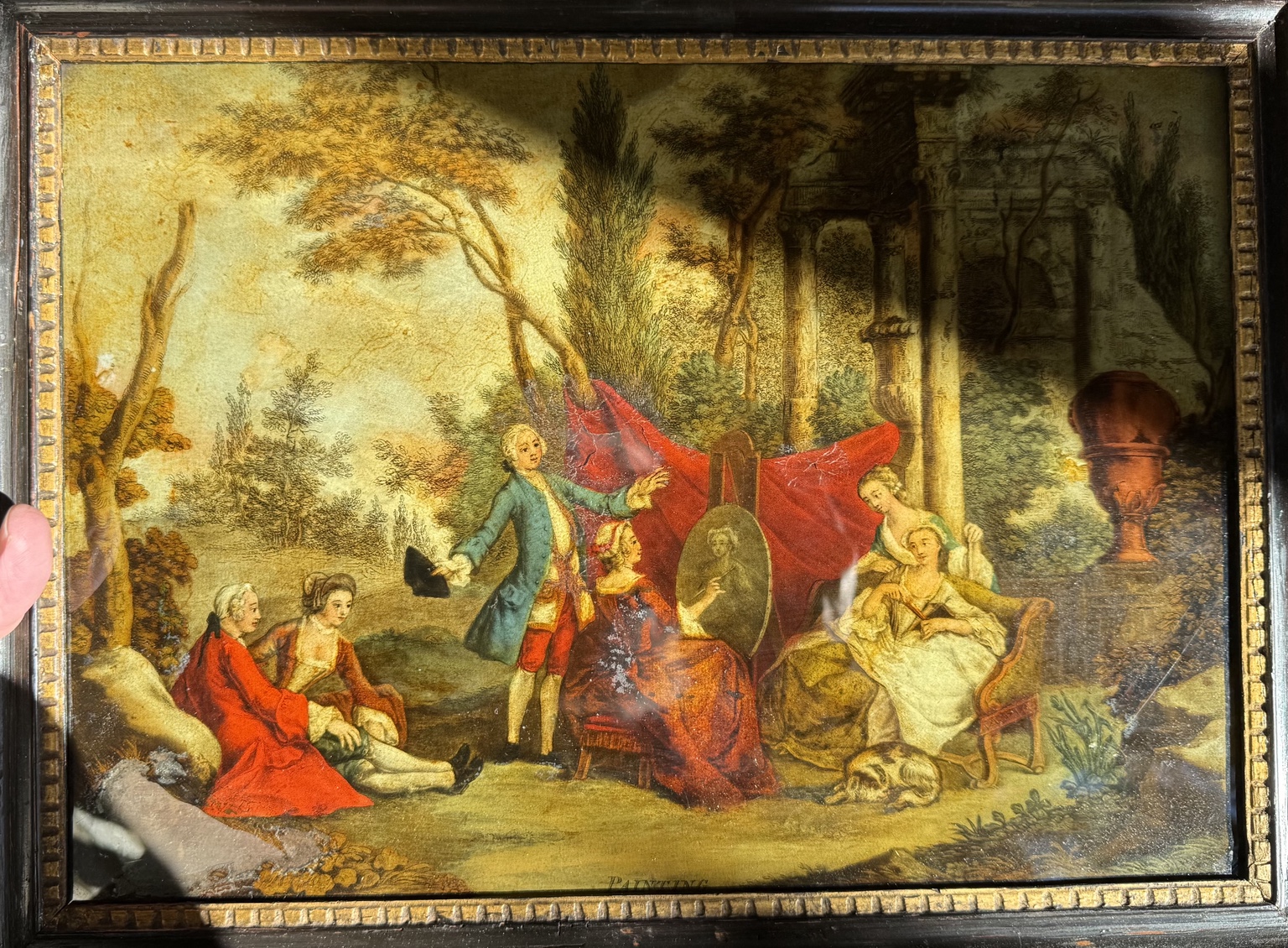
Both objects reportedly retain matching reverse inventory labels inscribed XV.12Y; both original labels are now shown together below for direct comparison. The matching codes give us a remarkable lead into the pictures’ earlier history.
Painting and Architecture
Both are hand-coloured reverse-glass mezzotint pictures. Their material format matters: these are not simply paper prints framed behind glass, but images whose production and survival invite questions about transfer, colour, display and commercial distribution.
Full object photographs and measured descriptions will be incorporated when the catalogue records are finalized.
Two labels, one handwritten code: “XV.12Y”
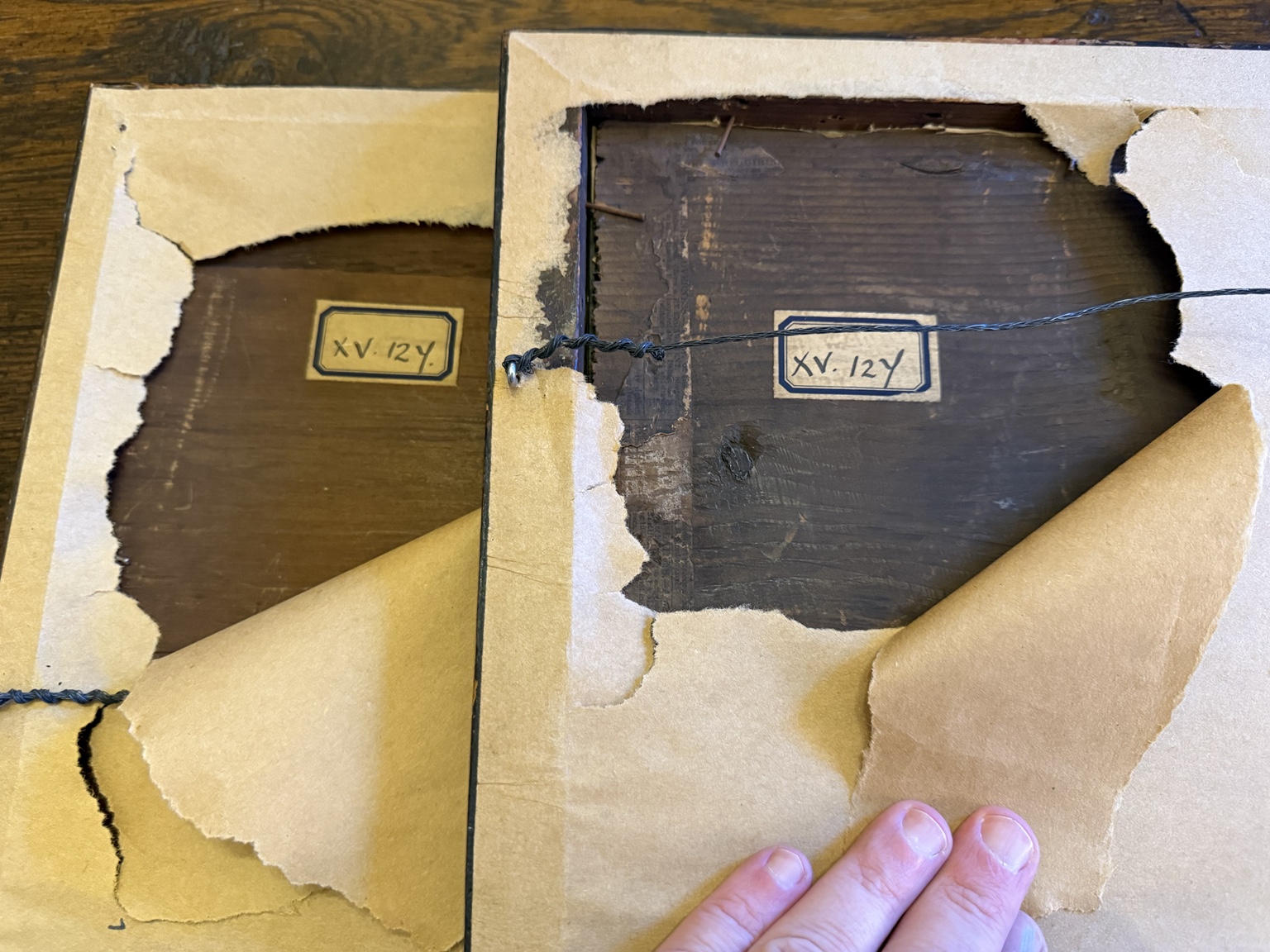
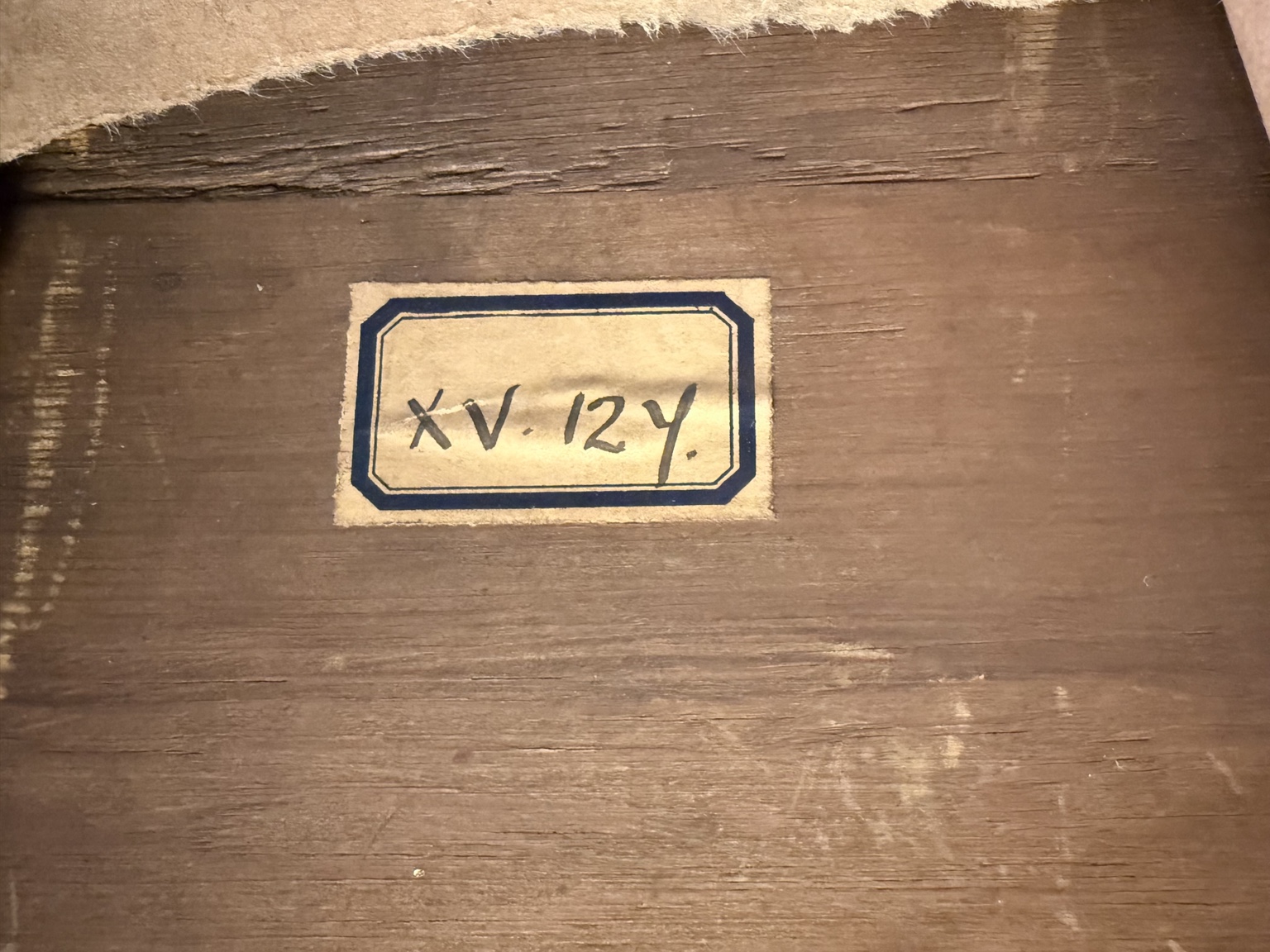
Each picture carries a yellowish, clipped-corner inventory label with a double dark border and the handwritten code XV.12Y, as read by the collection owner. The similarity of label design, handwriting and code is a potentially important indication of a shared episode in the objects’ histories.
It does not, by itself, identify an earlier owner, prove that the pictures were originally sold together, or establish when they became separated. Possible explanations include a common collector, dealer, inventory system or later dispersal. Distinguishing among these possibilities requires corroborating documentation.
Placed side by side, the labels tell their own story: the same code, the same border, the same distinctive form. Someone once numbered these pictures within the same system. The next task is to discover who, and when.
Six allegories and a dating problem
The broader series is associated in historical references with Music, Painting, Poetry, Sculpture, Architecture and Astronomy in Clarke’s account. Other references and surviving examples use differing subject lists or titles, which must be reconciled rather than silently combined. H. G. Clarke’s The Story of Old English Glass Pictures, 1690–1810 (1928), p. 77, describes a six-part series and proposes a date around 1776. That estimate should not be treated as a securely documented publication date; publisher and spelling variants may bear on the chronology.
Questions still open
- Can the “XV.12Y” code be traced to an inventory, sale catalogue or dealer archive?
- Do surviving paper impressions and glass pictures share the same plate states and lettering?
- What does the survival of multiple glass examples tell us about commercial production and distribution?
- How do the publisher names and variant titles help establish the series’ sequence?
The investigation continues through surviving prints, old labels and historical catalogues.