Saint Agnes
A portrait, a devotional guise, and the circulation of an image through paintings, drawings and prints.
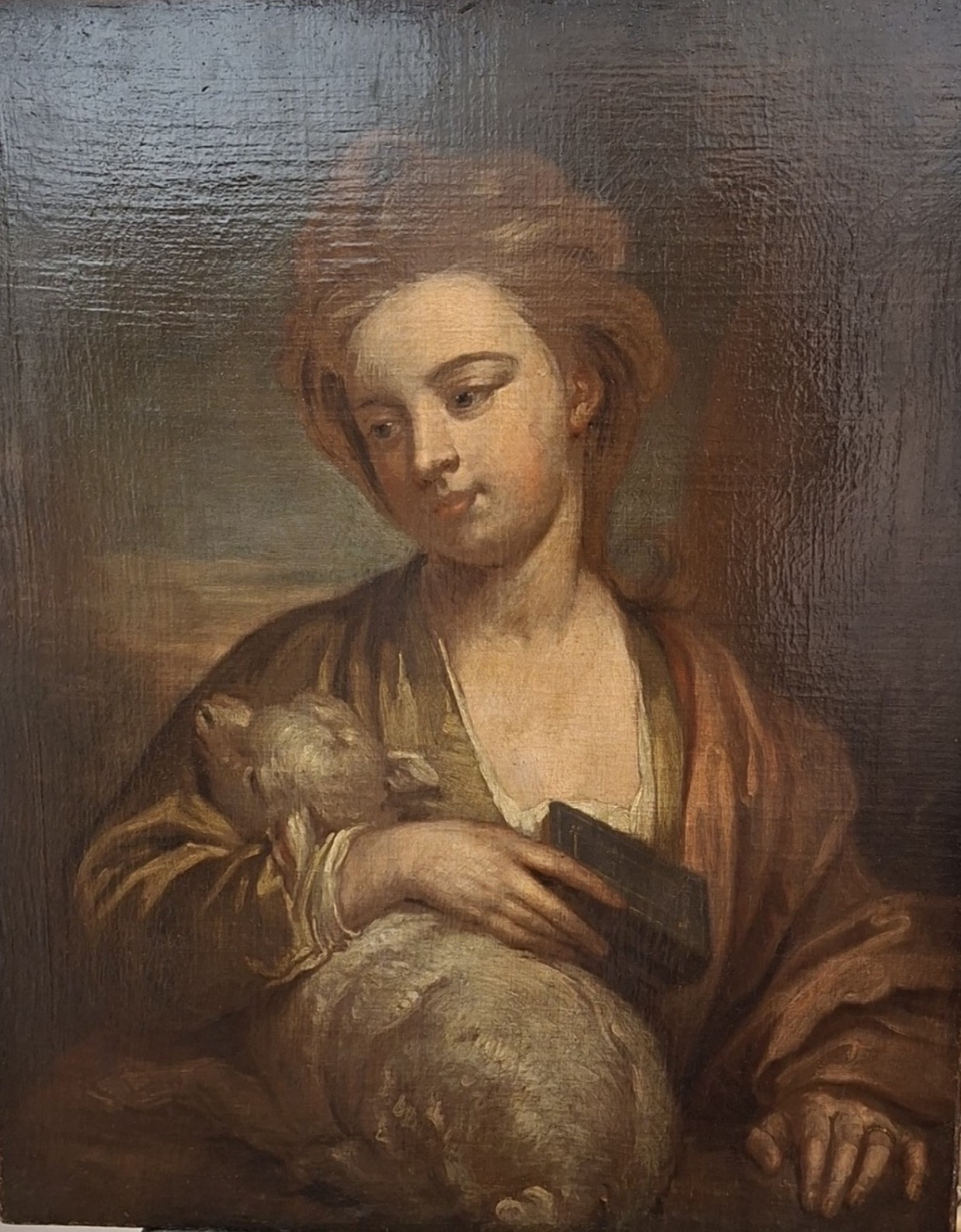
The story begins with a young woman, a lamb and a portrait that refuses to stay in one form. The Turner House painting belongs to a family of images associated with Sir Godfrey Kneller and Catherine (also spelled Katherine or Katharine) Voss. Its subject is represented in the devotional guise of Saint Agnes, accompanied by a lamb. The relationship between this particular canvas and the wider composition remains under investigation.
What is established
The painting repeats a composition associated with Kneller. Related evidence includes another painted version, preparatory or related drawings attributed within the Kneller/Byng circle, and mezzotint interpretations. The Turner House canvas has undergone cleaning and relining; comparisons must account for changes in its appearance.
What remains uncertain
The central questions are now sharper: who painted the Turner House version, how does it relate to the other surviving painting, and what can the drawings and prints tell us about the image’s journey through Kneller’s circle?
One composition, four interpretations
Select any image to enlarge it; press Escape or use Close to return to the article.
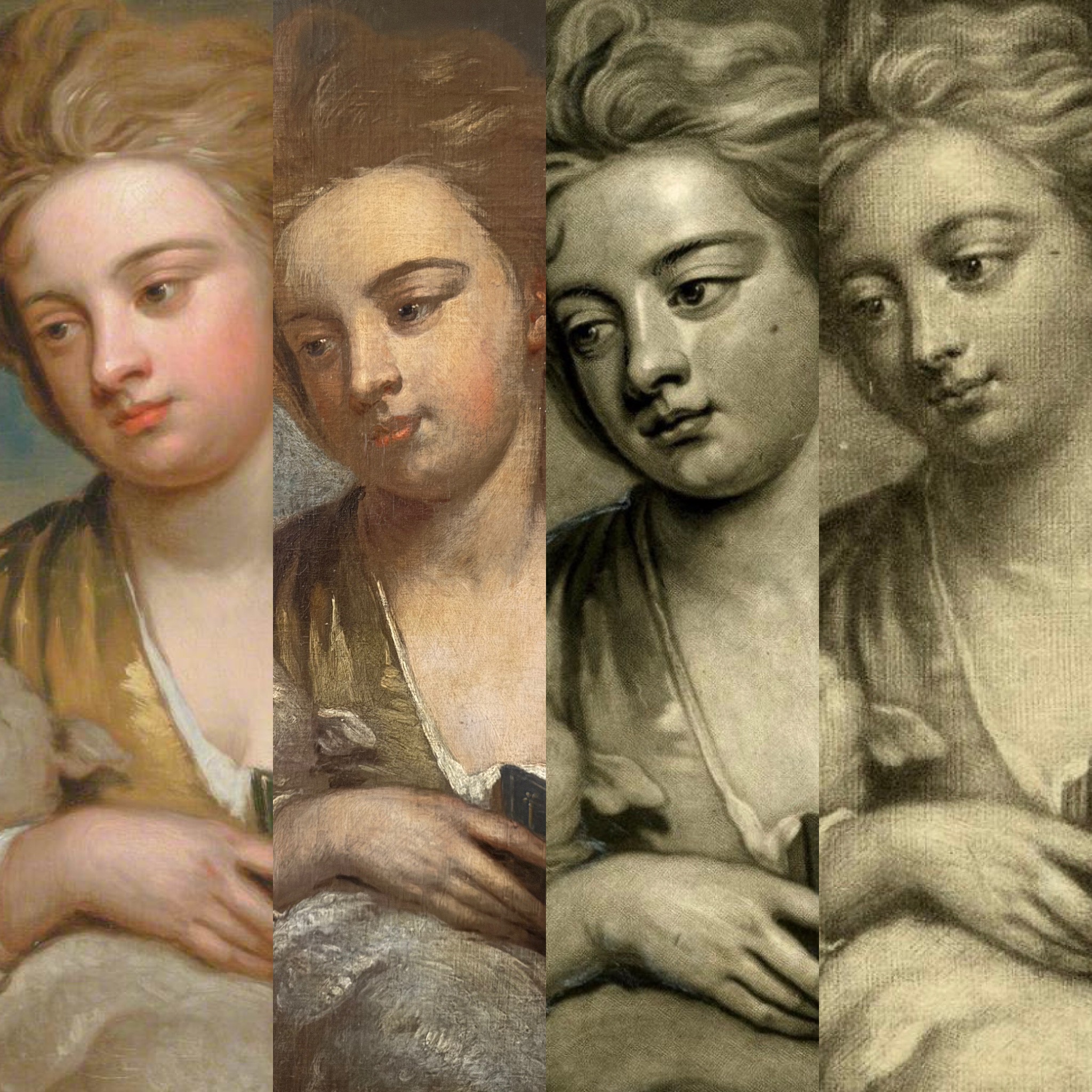
The juxtaposition makes differences in facial modelling, brow line, hairstyle and the position of the hands easier to study. It is a visual comparison, not evidence by itself for a chronological sequence or direct copying relationship.
The image across media
We begin with the details: the sitter’s face and hair, the folds of her dress, the lamb, and above all the hands. A ring visible in some evidence but omitted in later printed representations is one potentially useful detail. Such differences may reflect changes to a plate, the use of different models, or an engraver’s interpretation; they cannot be assigned a single cause without further evidence.
The composition across media: paintings, drawings, and prints
The images below reproduce the full comparative works rather than repeating cropped views of the Turner House canvas. They should be read alongside the four-way facial comparison above. Reproductions are not standardized for scale, colour, orientation or photographic conditions.
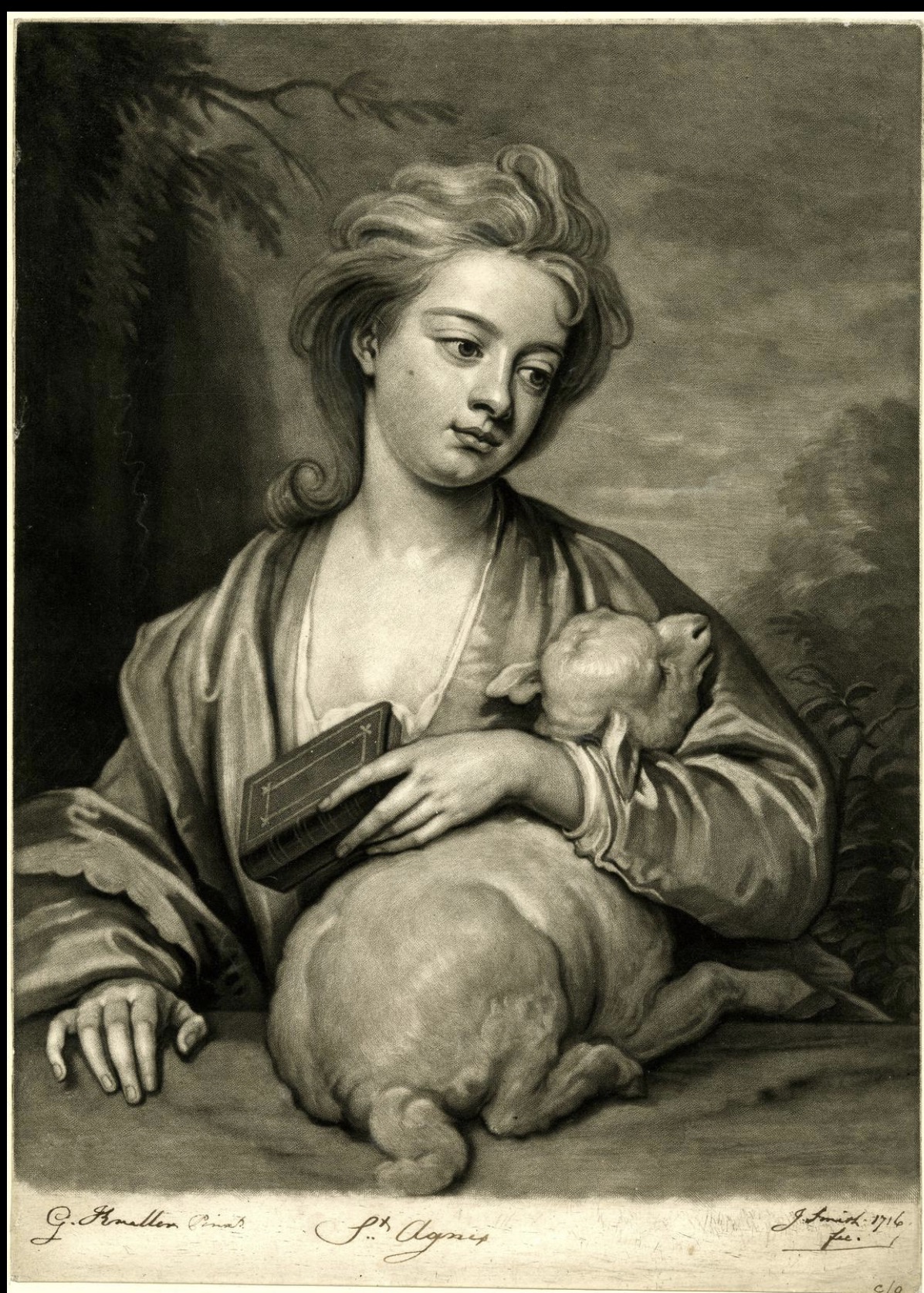
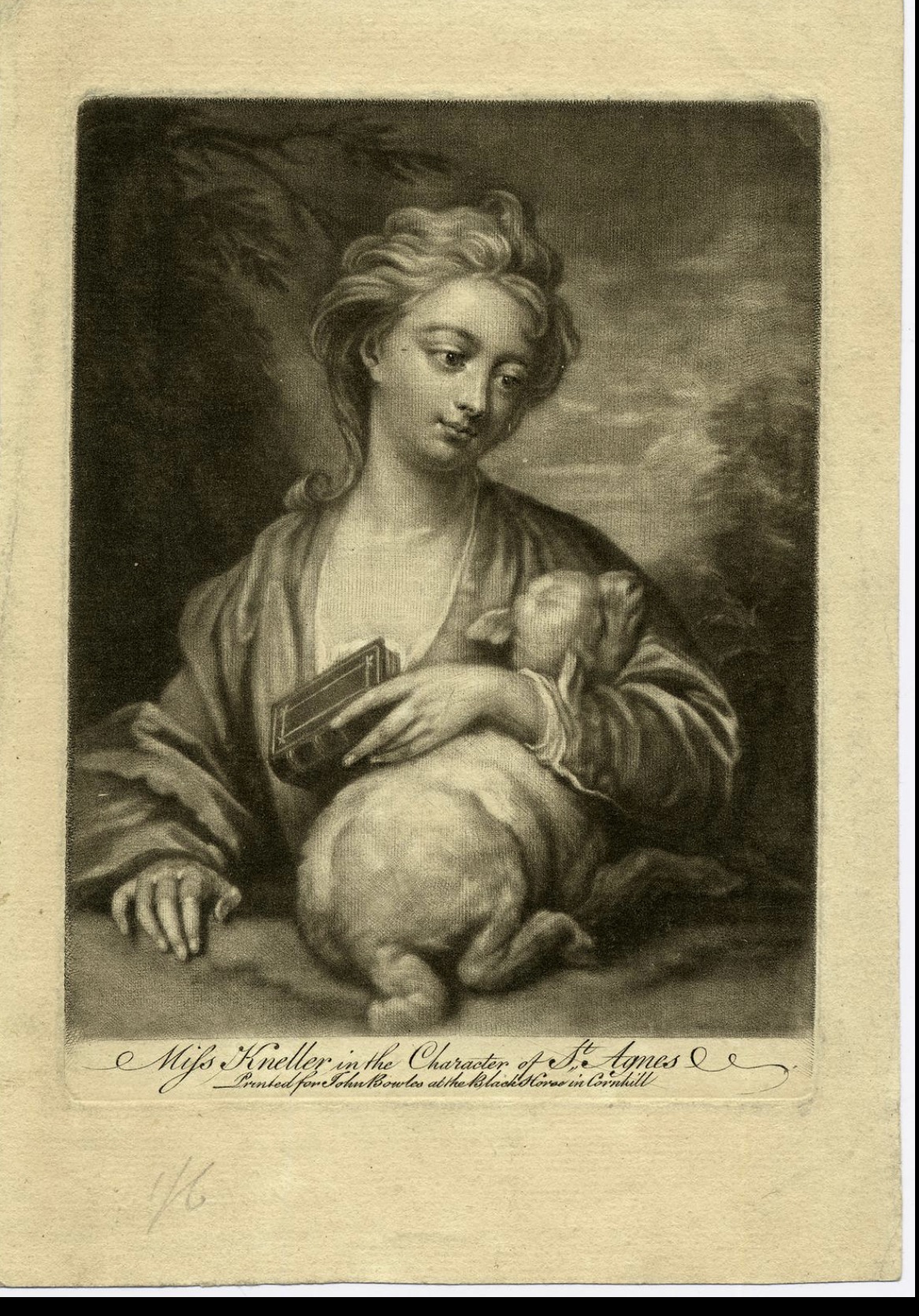
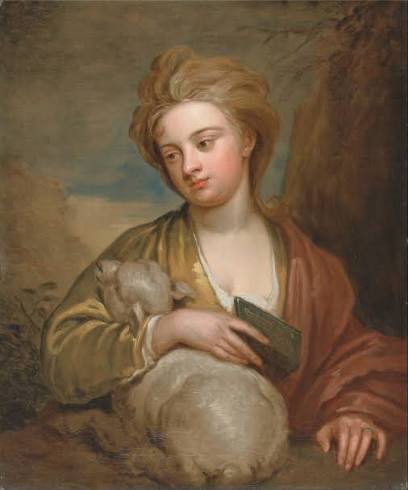
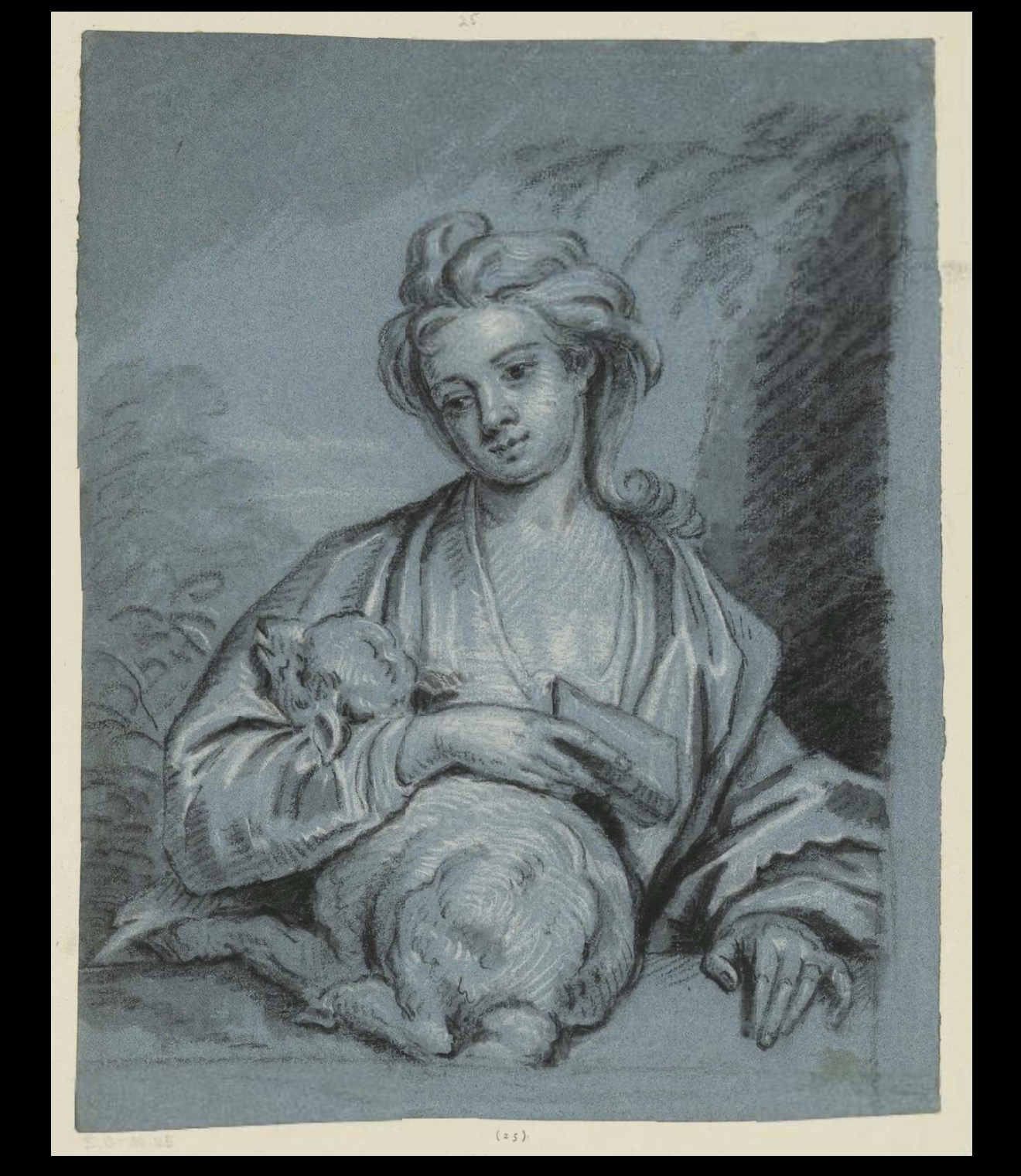
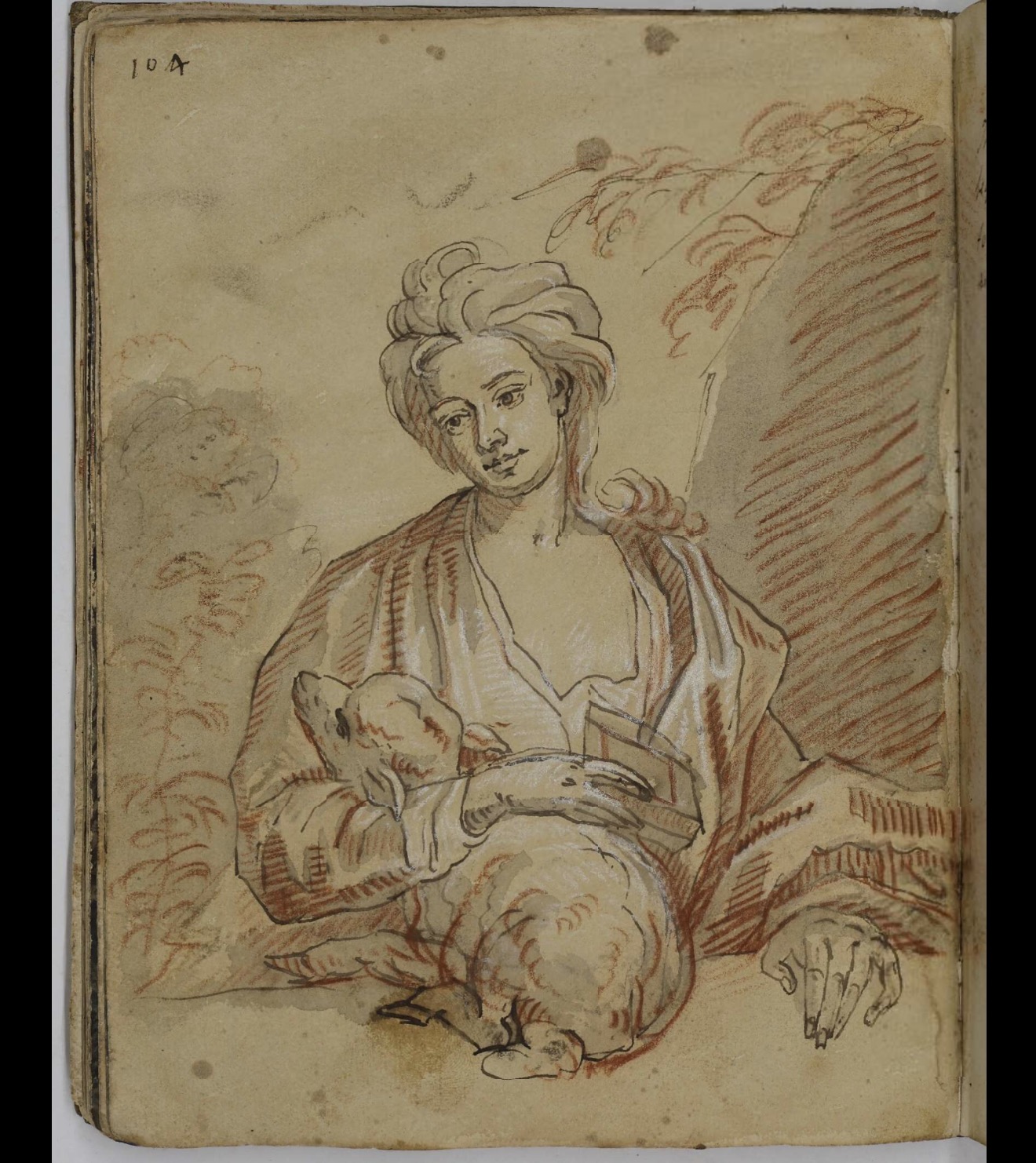
Source images supplied for research comparison. Attributions and institutional credits are descriptive pending final catalogue verification; no reproduction permission from third-party institutions is implied by their inclusion.
The people behind the image
The research also examines Kneller's studio and its collaborators, including Edward Byng, and the later circulation of portraits through publishers and collectors. Surviving wills, catalogues and print records provide possible pathways for reconstructing these networks, but no unverified ownership chain is presented here as fact.
Questions guiding the investigation
- Which visual differences are original to each version, and which result from restoration or photographic conditions?
- Can any documented sale, inventory or contemporary inscription be securely tied to this particular canvas?
- What do the sequence and variants of printed impressions reveal about the image's changing identity?
Selected comparative sources
Research materials include the Yale painted version; British Museum drawings associated with the Kneller/Byng circle; John Smith and John Bowles mezzotints; and eighteenth-century print-sale and publisher catalogues. Exact object numbers, impressions and bibliographic references will be added as each comparison is checked for publication.
The investigation continues through close comparison, surviving prints and archival records. Each new piece of evidence helps reconstruct the history of an image that lived far beyond its original canvas.