Seven objects and discoveries, each with a question we are still trying to answer.
A painting, a Bible, a print-shop window and objects hidden in a staircase might seem to have little in common. Each has led us to a question that cannot be answered by appearance alone. Here are seven investigations from the Collection, including the evidence we have and the gaps that remain.
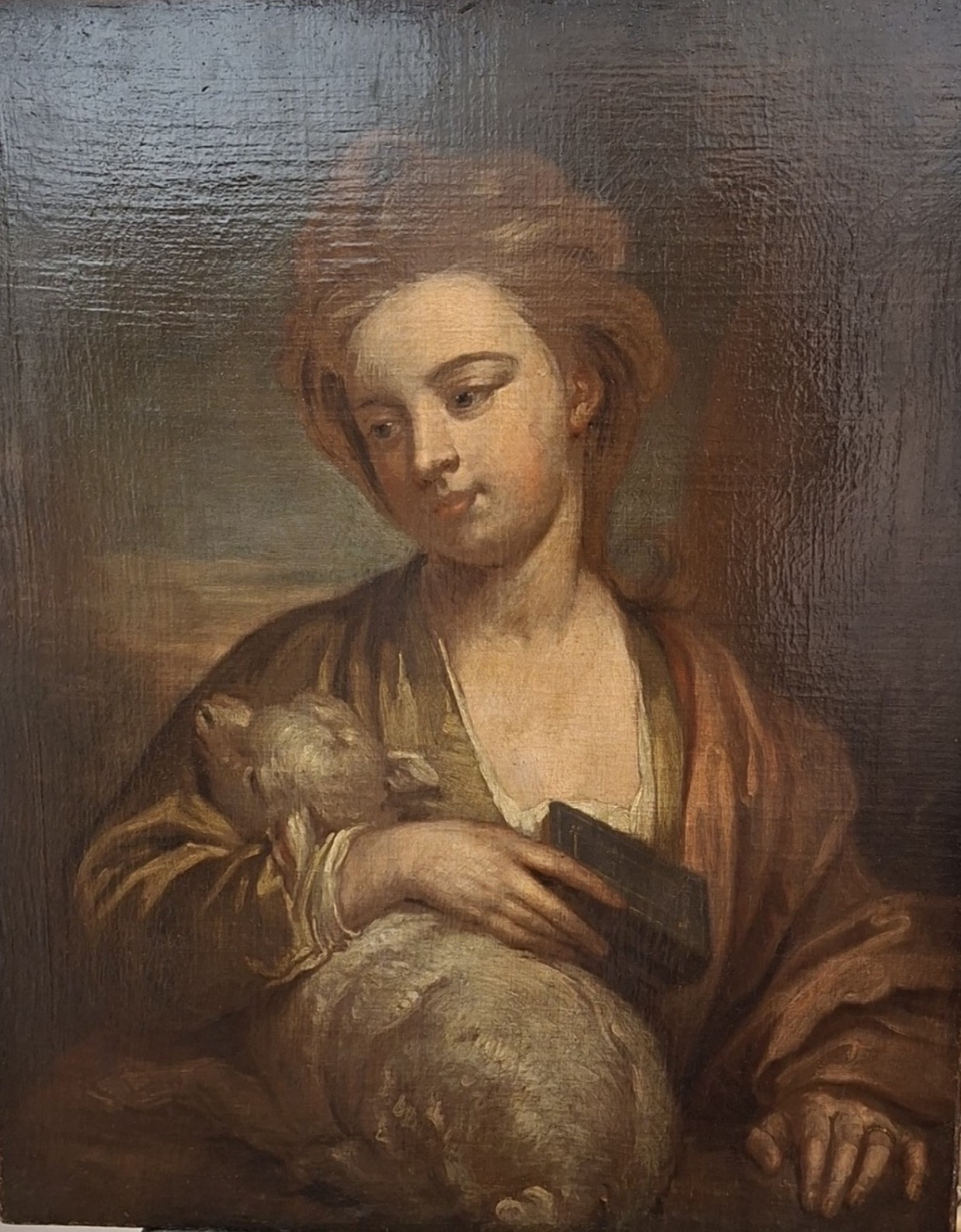
Saint Agnes, oil painting, Turner House Collection. Photograph courtesy of the collection.
At first glance, this painting depicts a young woman with a lamb in the guise of Saint Agnes. But the image belongs to a much larger story surrounding Sir Godfrey Kneller, the sitter Catherine (Katherine) Voss, and the artists and printmakers who repeated and transformed fashionable portraits. Research into the Turner House painting has brought it into dialogue with another painted version, surviving drawings, and mezzotints published in different forms over time. Close comparison of details, from the sitter’s features to the treatment of the lamb and costume, raises questions about workshop practice, authorship, and the circulation of images. The painting is therefore both an artwork and a starting point for reconstructing a network of artists, patrons, and publishers.
Our study documents differences between the painted versions and their printed counterparts. Those details provide concrete evidence for investigating workshop authorship and the ways Kneller’s images circulated after leaving the studio.
Next question: Who painted this version, and how did it pass through later collections?
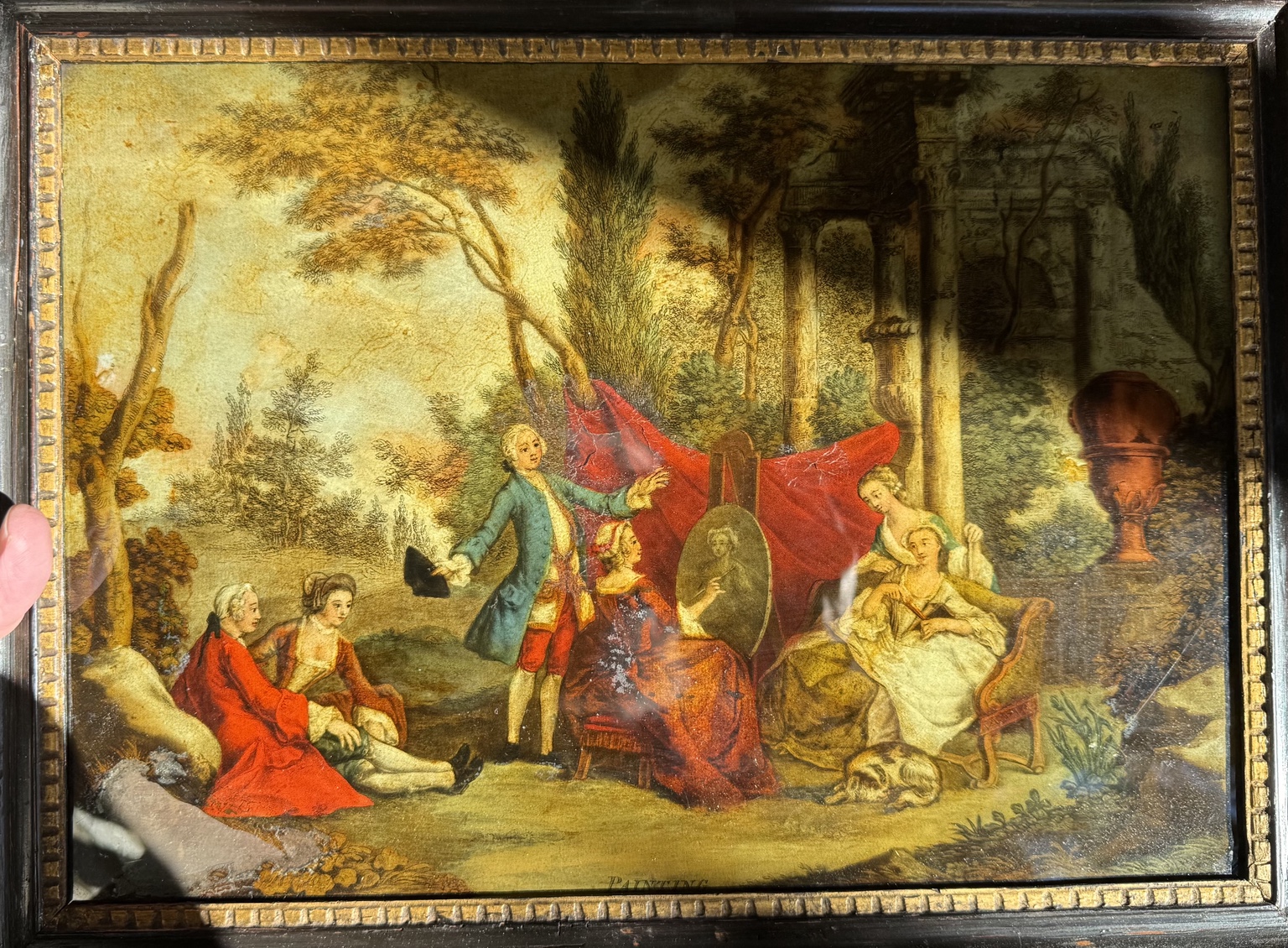
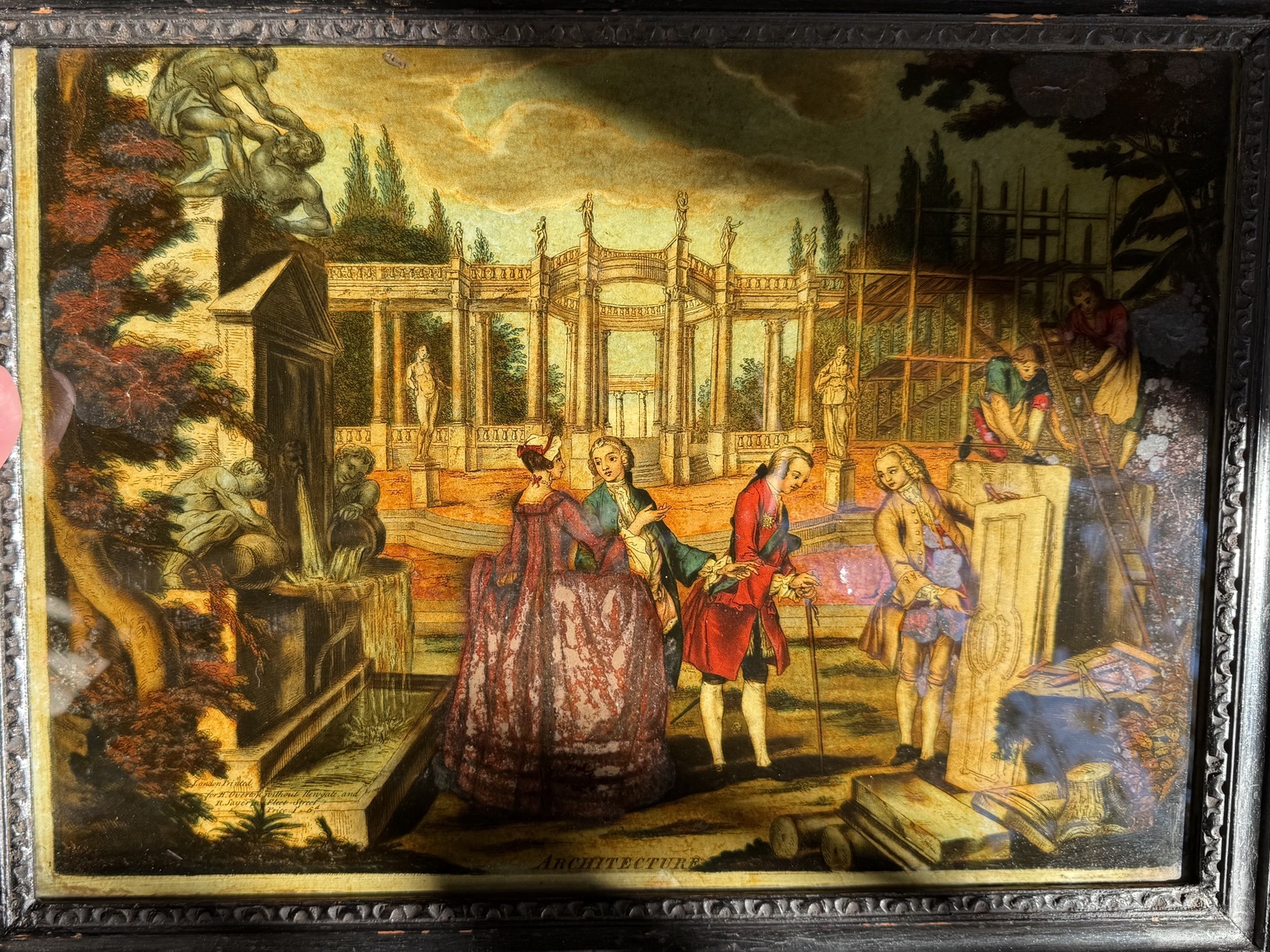
Painting, hand-coloured reverse-glass mezzotint, Turner House Collection.Architecture, hand-coloured reverse-glass mezzotint, Turner House Collection.
02 / Prints & Glass Pictures
The Arts and Sciences
How Mezzotints Became Glass Pictures
These vivid eighteenth-century glass pictures depict Painting and Architecture, two subjects from a larger allegorical series devoted to the arts and sciences. Their bright colours and elaborate settings reveal how prints could become fashionable decorative objects when transferred into the medium of reverse-painted glass. The Turner House Collection is tracing surviving examples of the series on both paper and glass, investigating publishers, variants, and the ways images were adapted for different markets. A particularly unexpected clue emerged when the two pictures, acquired separately from different dealers, proved to carry matching old inventory labels, each inscribed “XV.12Y.” Were they once part of the same set or collection? The duplicated labels offer a tantalising lead in a provenance story still being reconstructed.
The matching “XV.12Y” labels connect two glass pictures that had reached separate dealers. Their identification, together with comparison of the surviving paper and glass images, creates a new evidentiary trail for tracing this eighteenth-century series.
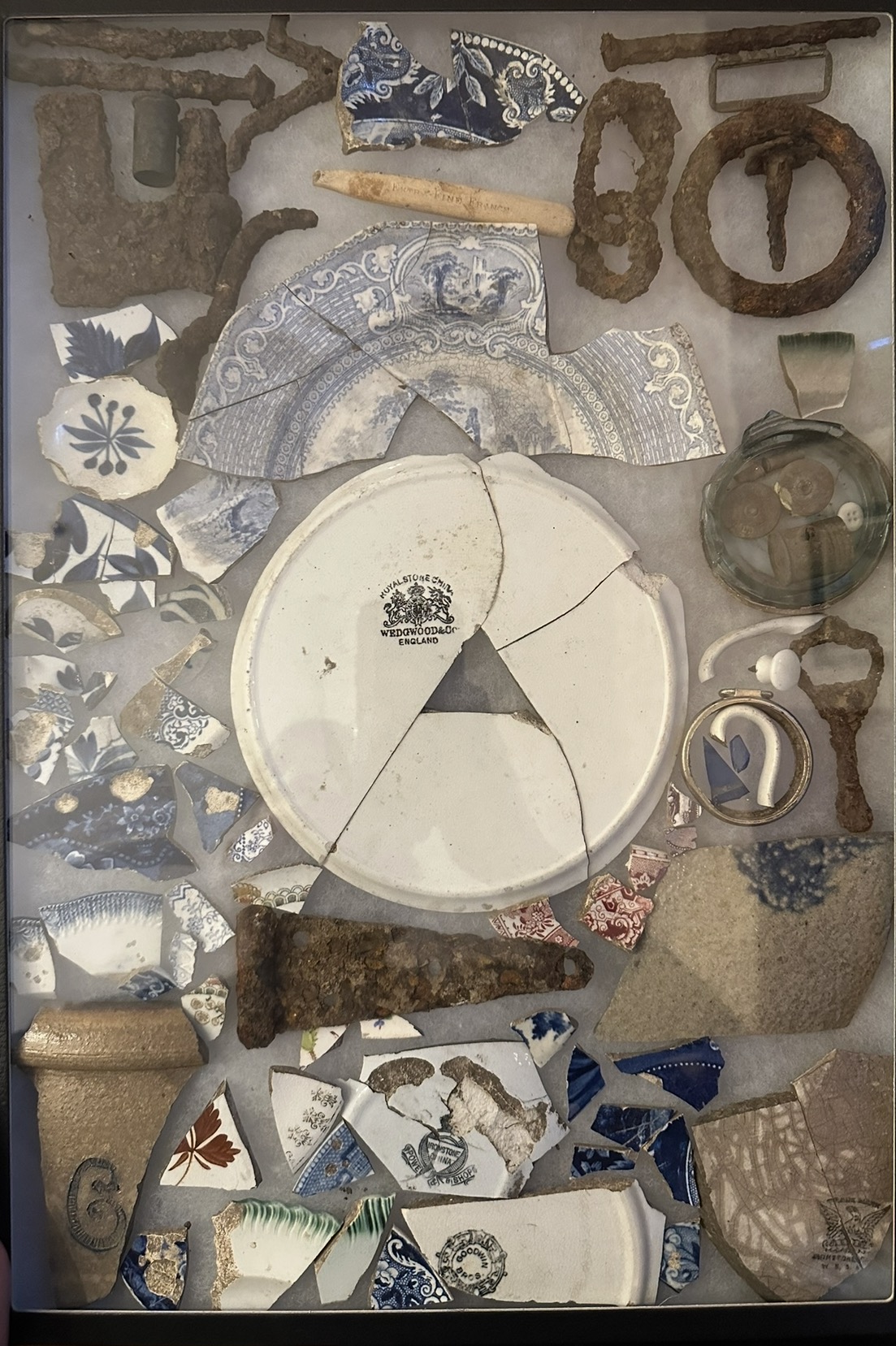
Selected archaeological finds from the Turner House property, arranged for display. Turner House Collection.
03 / House Archaeology
Beneath the Grounds
An accidental garden discovery uncovers the buried history of Turner House
The Turner House archaeological collection began with an unexpected discovery in the garden. While digging during spring planting several years ago, the owner encountered a small deposit of historic artifacts beneath the soil. What began as an accidental find prompted closer investigation and a larger excavation, revealing material traces of everyday life on the property. The growing assemblage includes fragments of transfer-printed and hand-painted ceramics, flow-blue ware, ironstone and stoneware, along with bottle glass, buttons, iron fittings, a horseshoe, square nails, and a possible bone-handled toothbrush fragment. These are modest objects, but together they open a window onto the households, habits, and changing material culture of nineteenth-century Rushville. The investigation ultimately led to the historic property being recorded in the Ohio Archaeological Inventory as archaeological site 33-FA3228. What else might the ground preserve about the people who lived and worked here?
Research note: The finds are being studied as evidence of the property’s changing domestic life; their individual dates and archaeological contexts require careful interpretation.
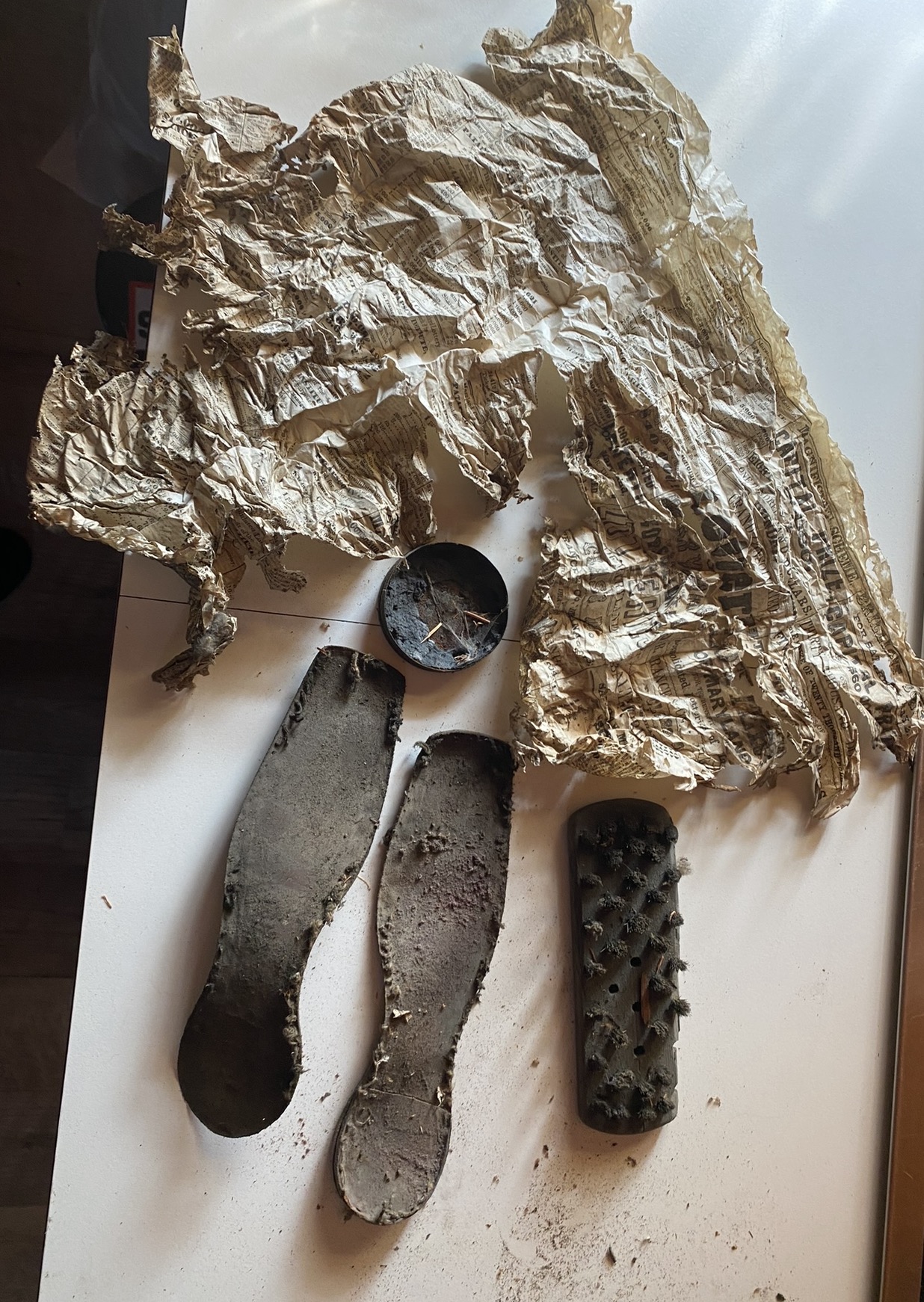
Objects discovered within the Turner House staircase, including a newspaper from May 1854 and shoe components. Turner House Collection.
04 / House Discoveries
Within the Staircase
An Unexpected Discovery Inside the Staircase
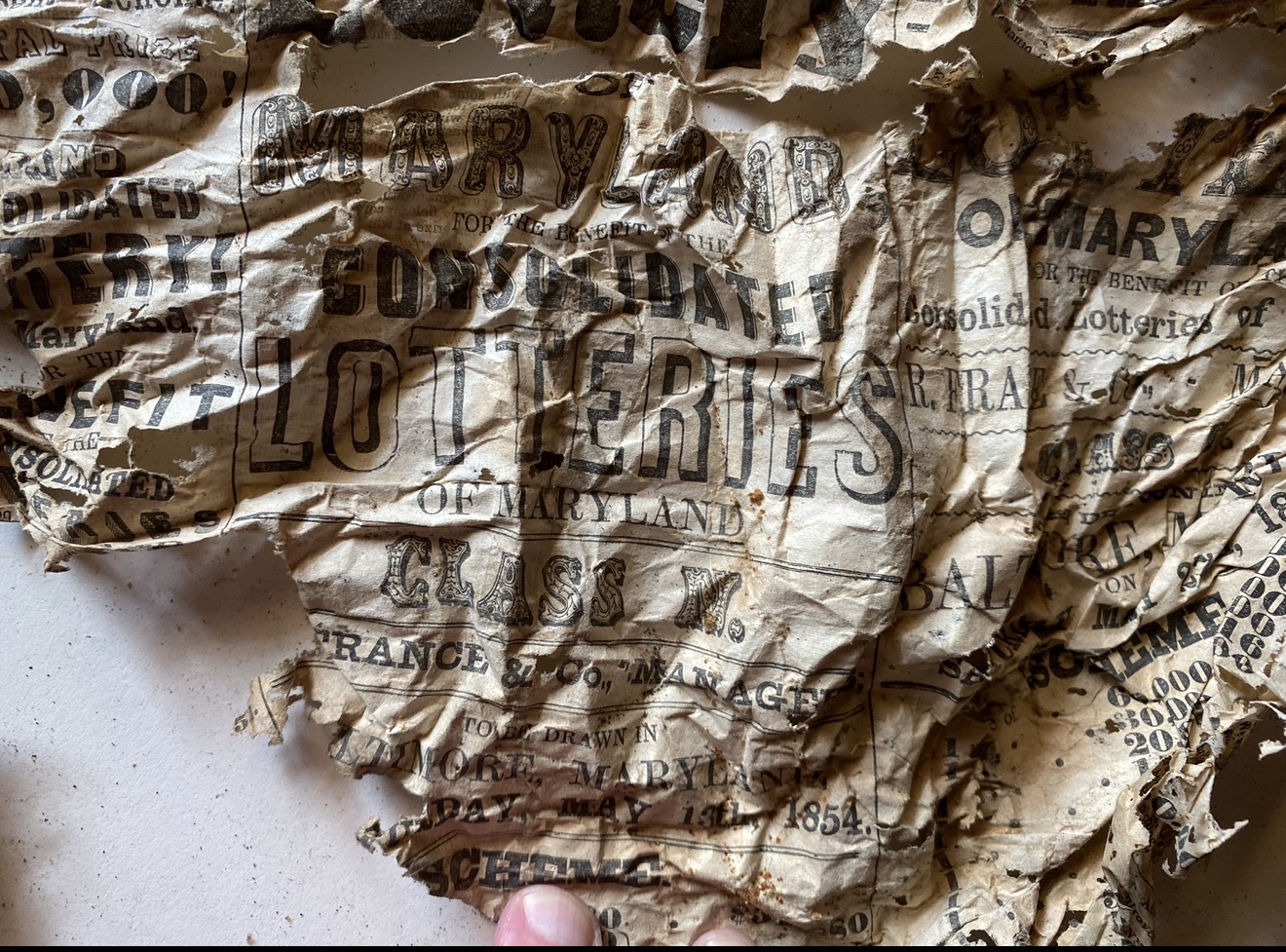
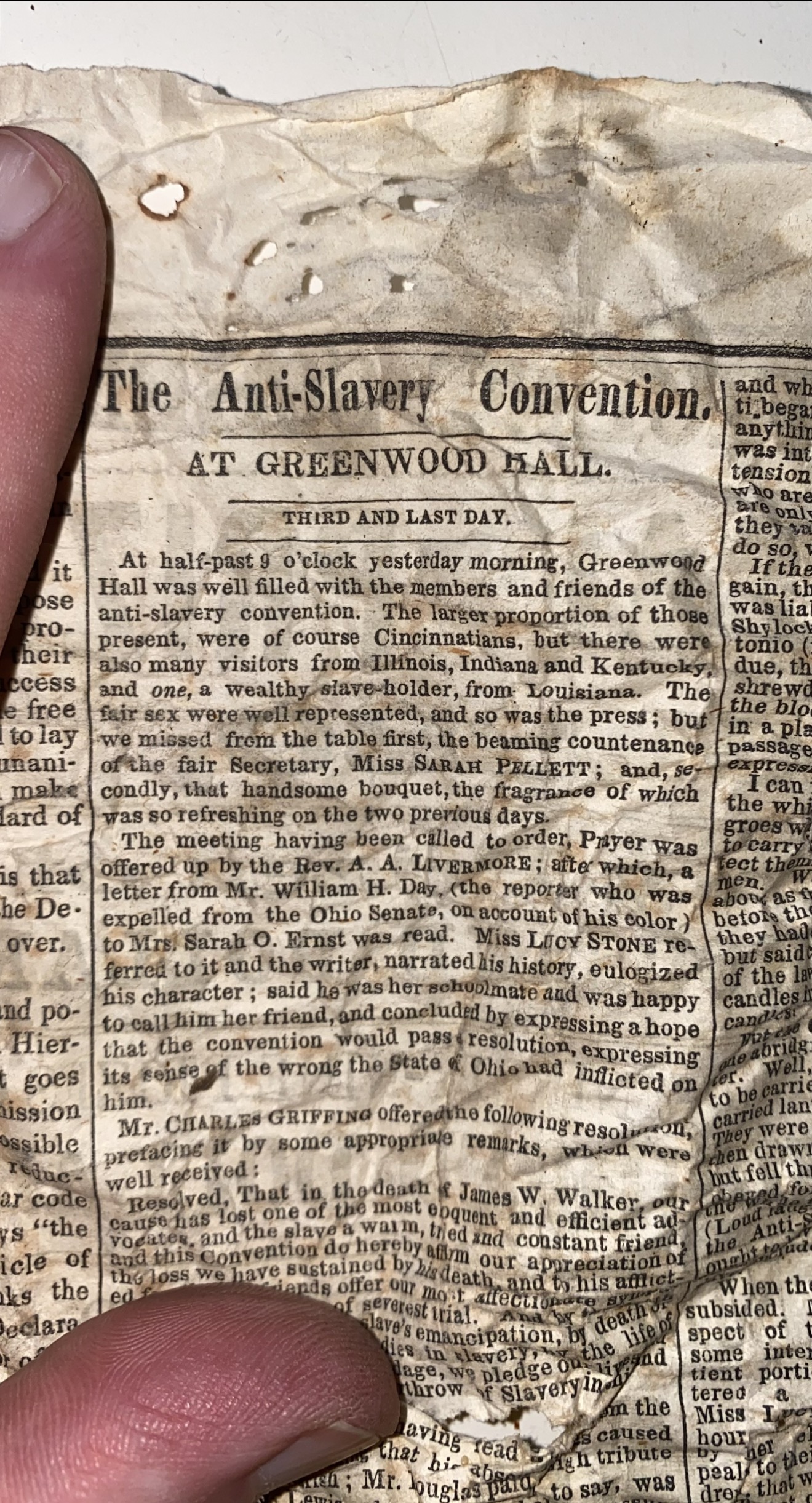
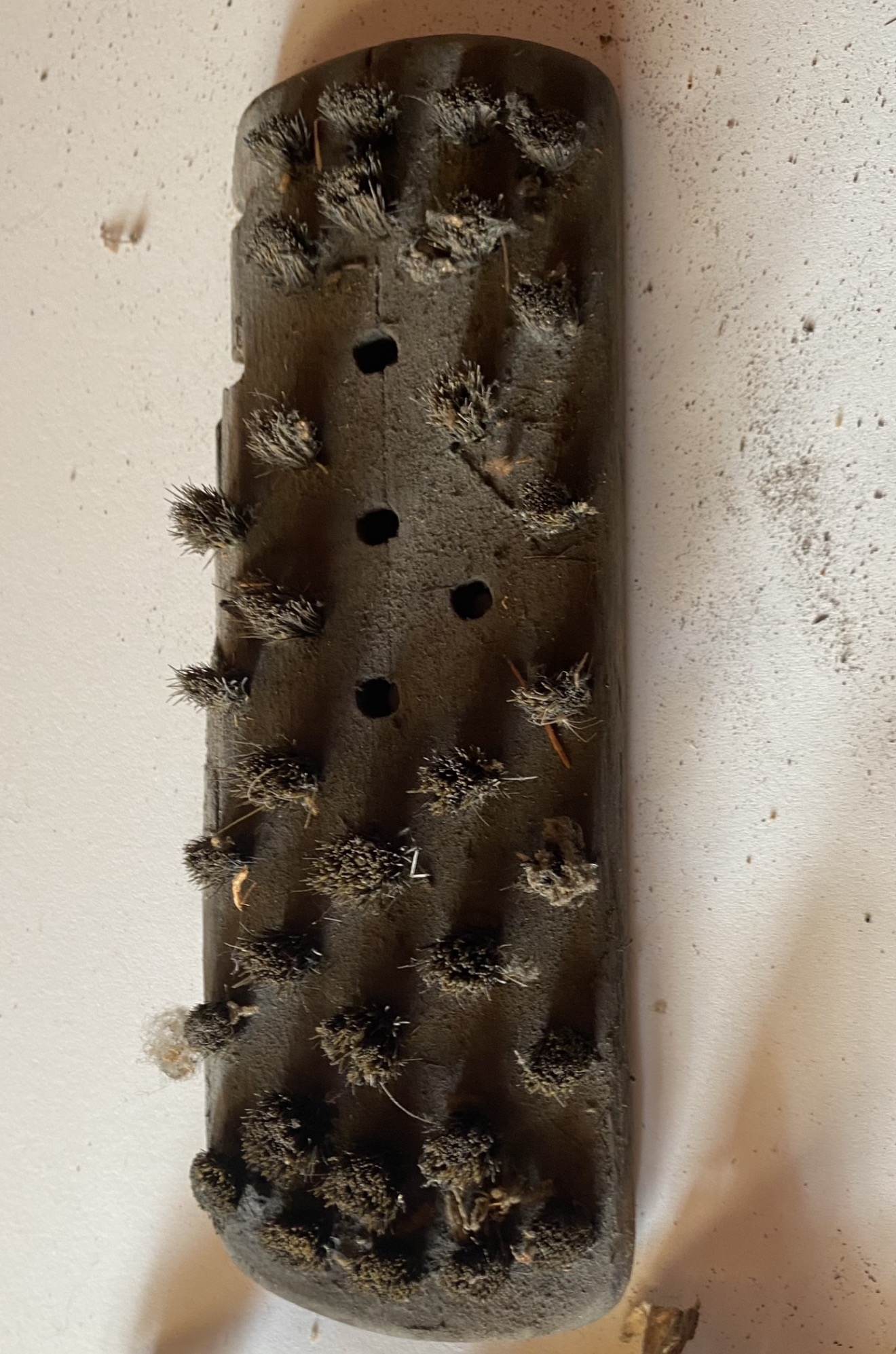
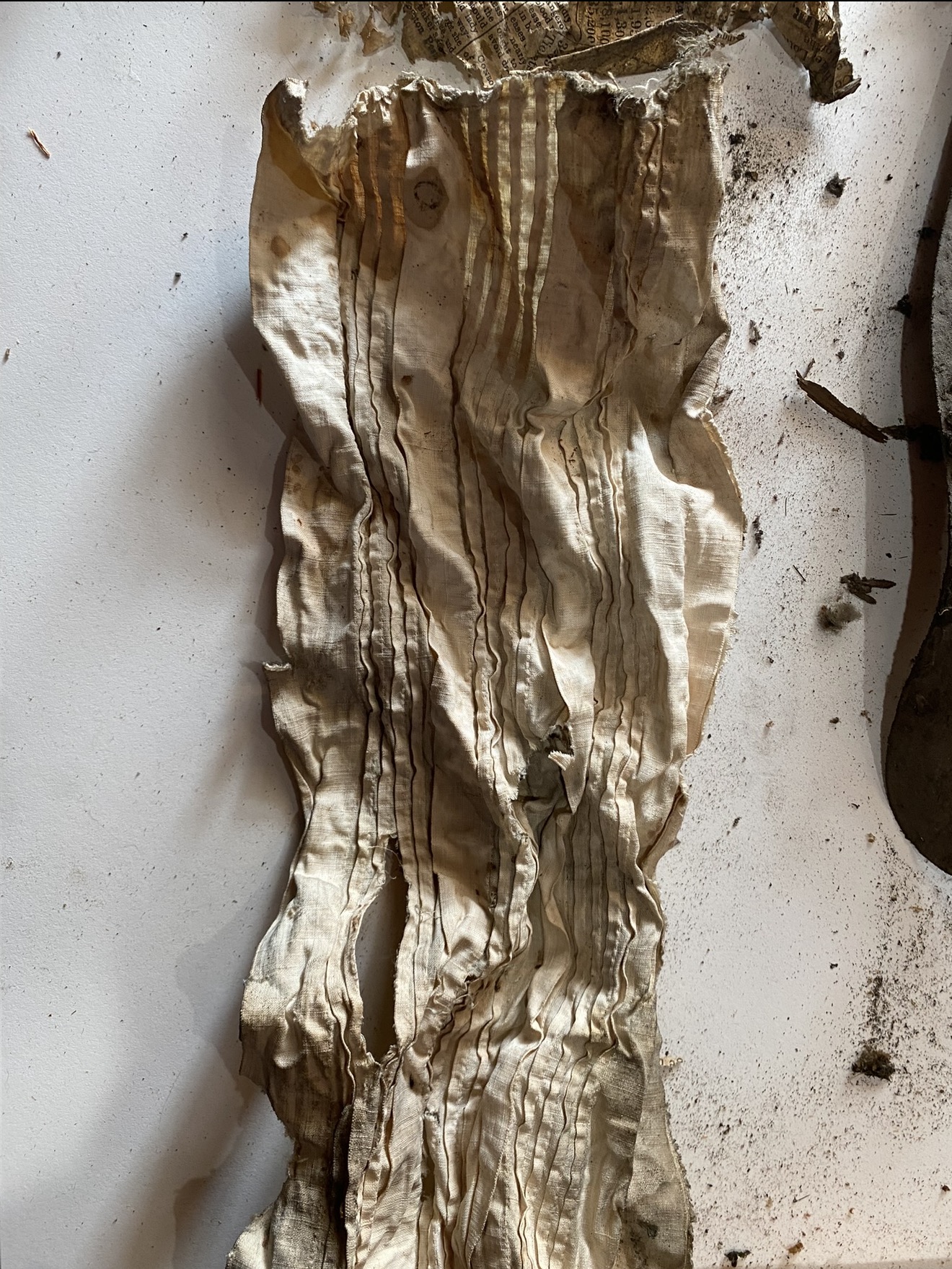
In September 2022, renovation work on the Turner House staircase led to an unexpected discovery: a small group of nineteenth-century objects apparently concealed within one of the stair steps. The assemblage included a newspaper from May 1854, textile fragments, shoe components, and other everyday items. The newspaper supplies a compelling historical date, while the mixture of objects raises a more elusive question: why were these things placed together inside the structure of the house? They may preserve a moment of ordinary domestic life that would otherwise have vanished without a trace. The house’s reputed connection to the Underground Railroad adds another intriguing dimension to the mystery of their concealment.
Maryland lottery advertisement from the recovered newspaper.Newspaper report of an anti-slavery convention at Greenwood Hall.Wooden brush with surviving bristles.Pleated textile from the staircase assemblage.
The mystery: Who placed these objects inside the staircase, and why?
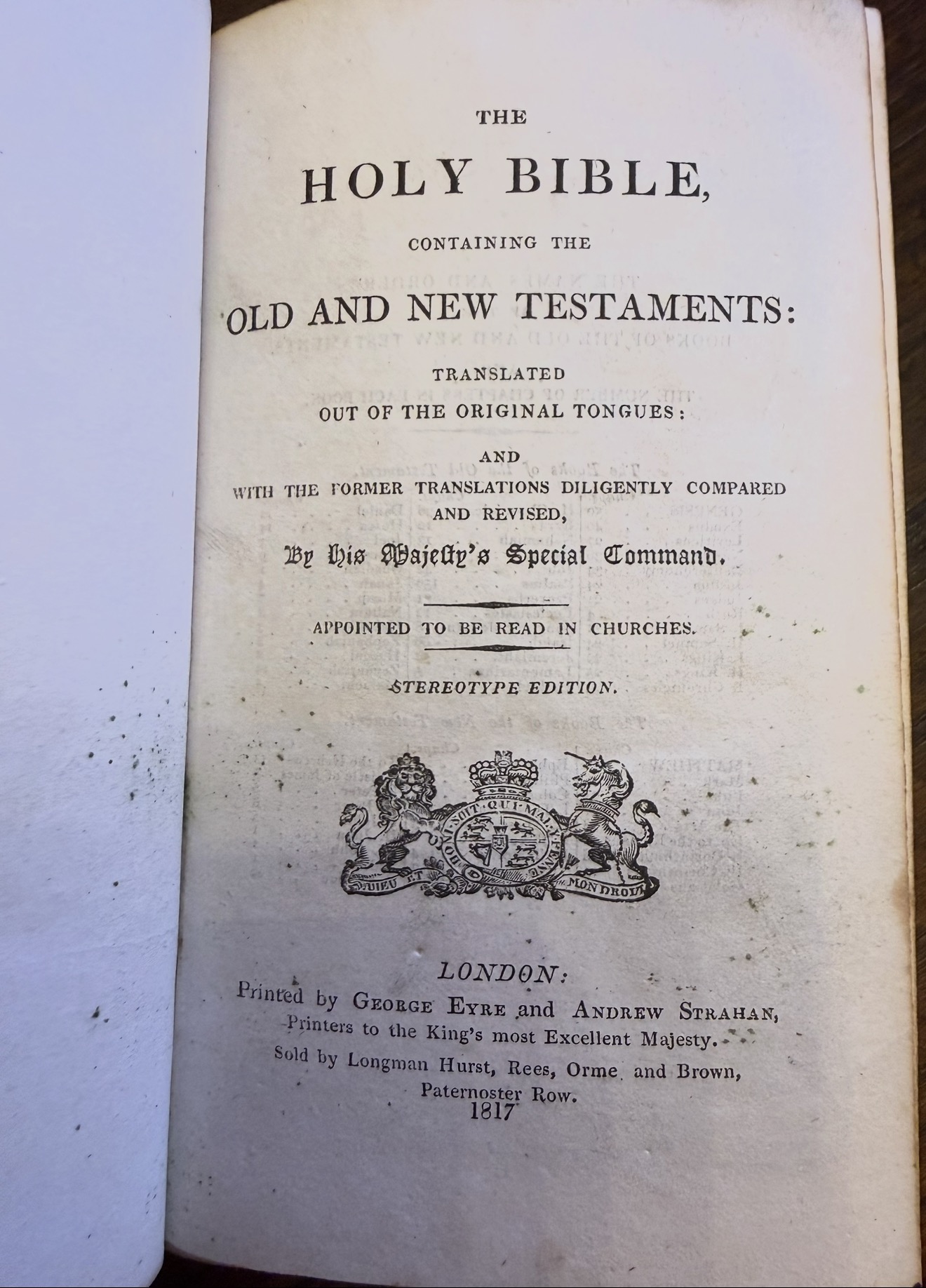
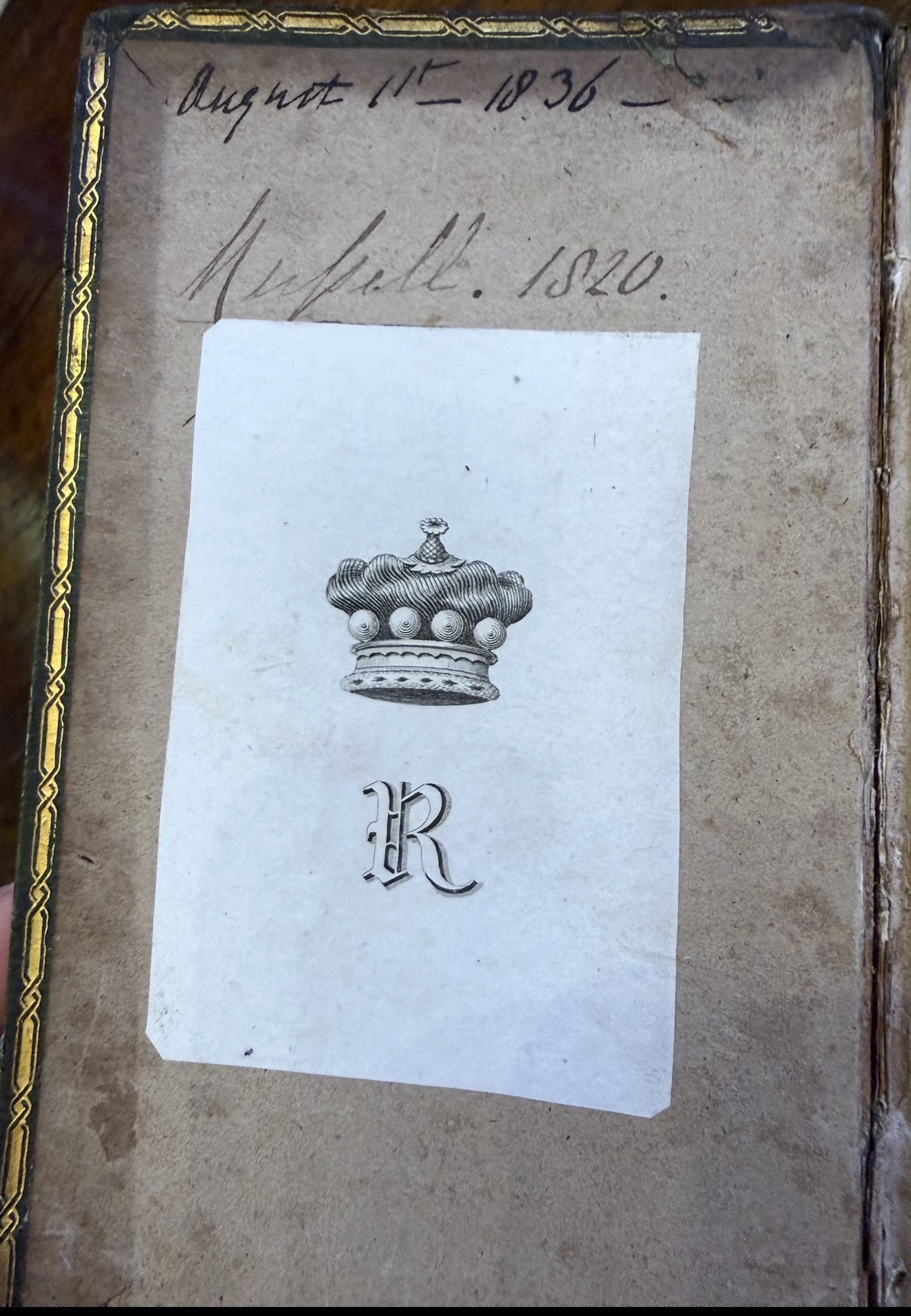
Title page of The Holy Bible, London: George Eyre and Andrew Strahan, 1817. Turner House Collection.Inside cover: crowned-R bookplate and handwritten inscriptions dated 1820 and 11 August 1836. Turner House Collection.
05 / Rare Books
The Bedford Bible Mystery
From a famous film producer’s library to the mystery of a duke’s crowned monogram
Printed in London in 1817 by George Eyre and Andrew Strahan, this beautifully bound Bible entered the Turner House Collection from the library of Lord David Puttnam, the celebrated British film producer associated with Chariots of Fire, The Killing Fields, and The Mission. But the volume may have a much older and equally intriguing history: a possible connection to John Russell, 6th Duke of Bedford (1766–1839), the British aristocrat, politician, and collector associated with Woburn Abbey. The evidence lies within the book itself. Bound in green morocco with gilt decoration, it contains a crowned-R bookplate, an inscription apparently reading “Russell. 1820,” and another dated 11 August 1836. Both dates fall within the Duke’s lifetime. Yet the clues are not straightforward. The bookplate appears to overlap part of the earlier inscription, suggesting the ownership marks were added at different times. The coronet above the letter R also does not clearly correspond to the form expected for a duke, raising the possibility that the bookplate belonged to another member of the Russell family, or to someone else entirely. Could this Bible once have stood in the library at Woburn Abbey? Was it the Duke’s personal possession, or does its history lead elsewhere? The Turner House Collection is investigating the handwriting, heraldic imagery, and historical records to reconstruct the book’s earlier ownership.
Follow the clues: The crowned monogram and handwritten dates invite a closer look at the Russell family and a possible connection to the Duke of Bedford.
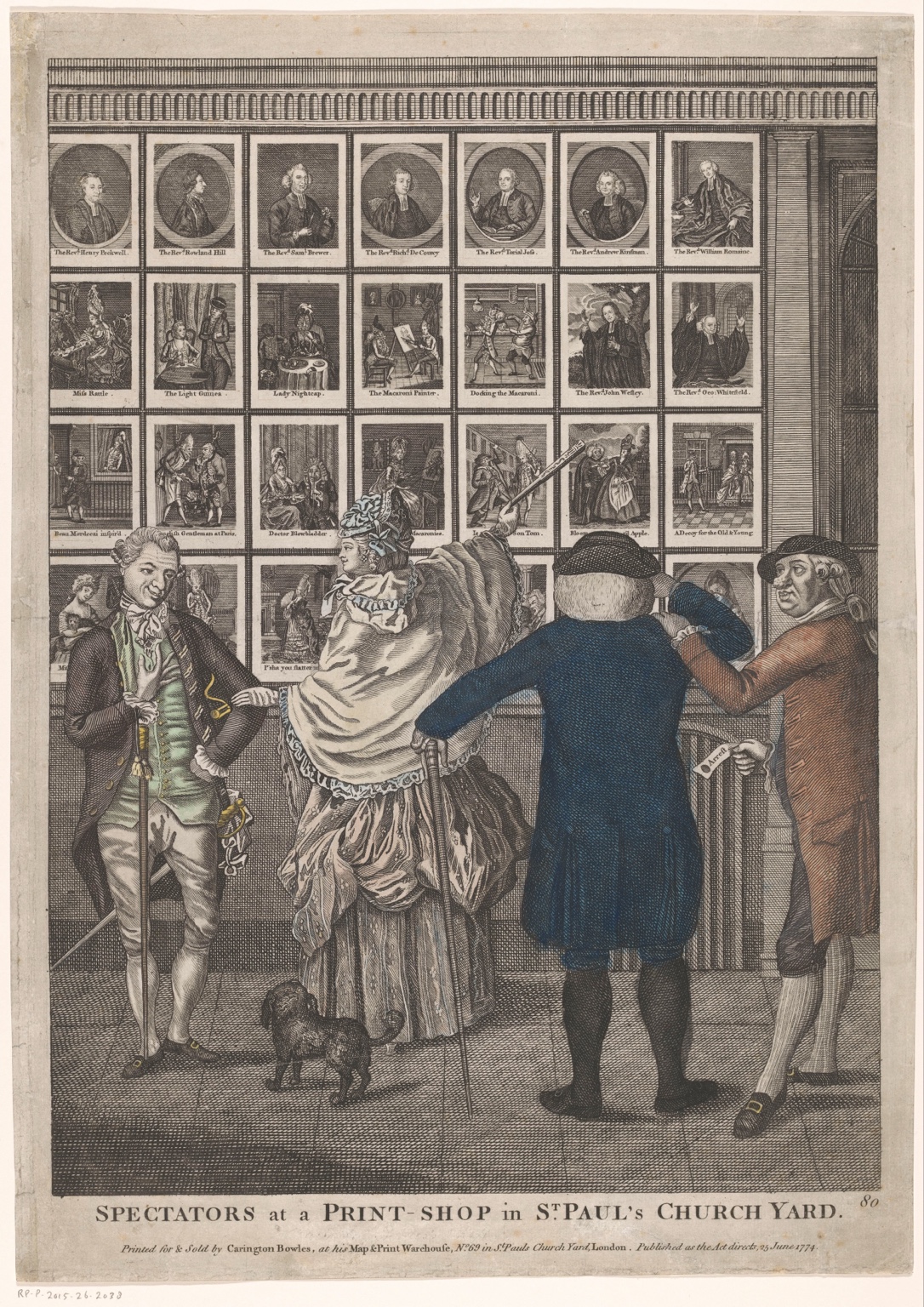
Spectators at a Print-Shop in St Paul’s Church Yard, published by Carington Bowles, 1774. Research reference image.
06 / Print Culture
The Bowles Print-Shop Images
Decoding the Print-Shop Windows of Georgian London
In eighteenth-century London, the print-shop window was a place to encounter the news, celebrities, religious controversy, fashionable portraits, and satire, all displayed for the attention of passers-by. Several surviving images of print shops depict tiny prints arranged in their windows, often so small that their subjects seem almost impossible to identify. By comparing those miniature depictions with surviving mezzotints, engravings, publishers’ catalogues, and dated advertisements, Turner House Collection research has begun to identify individual works shown in these crowded displays. Some matches reveal recurring popular images; others expose changes in engraved plates or unexpected connections between publishers and their audiences. The project treats the shop window as evidence of what eighteenth-century viewers could actually see, purchase, and discuss.
By assigning names and publication dates to individual images inside these print-shop scenes, the research turns miniature background details into a record of what eighteenth-century Londoners encountered in the print market. The resulting identifications also help explain visual jokes and changes between editions.
The investigation: Every identified print adds a name, date or new question to the story of Georgian London’s shop windows.
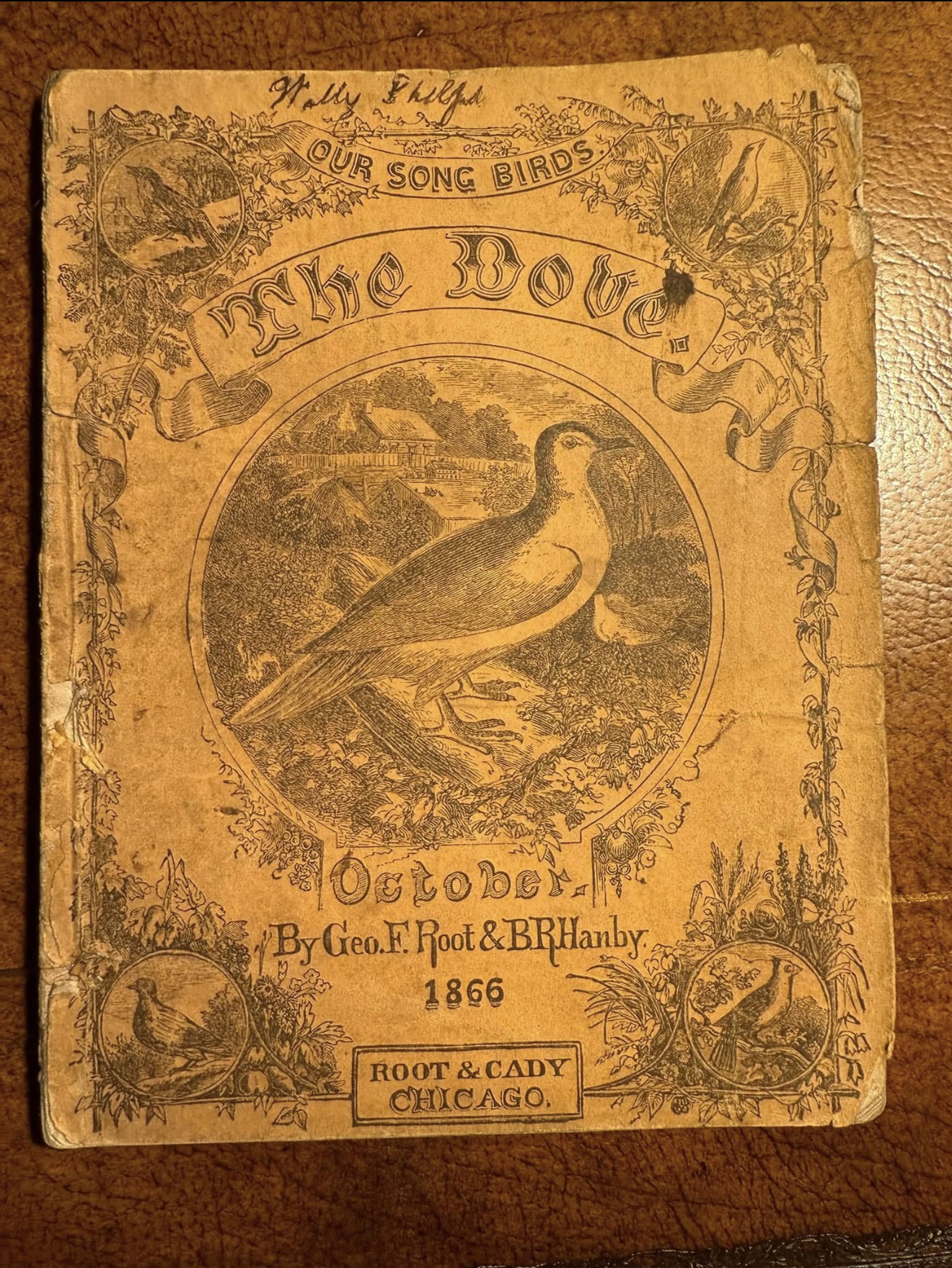
Our Song Birds: The Dove, Chicago: Root & Cady, October 1866. Original printed wrapper. Turner House Collection.
07 / Rare Books & Printed Music
The Dove, 1866
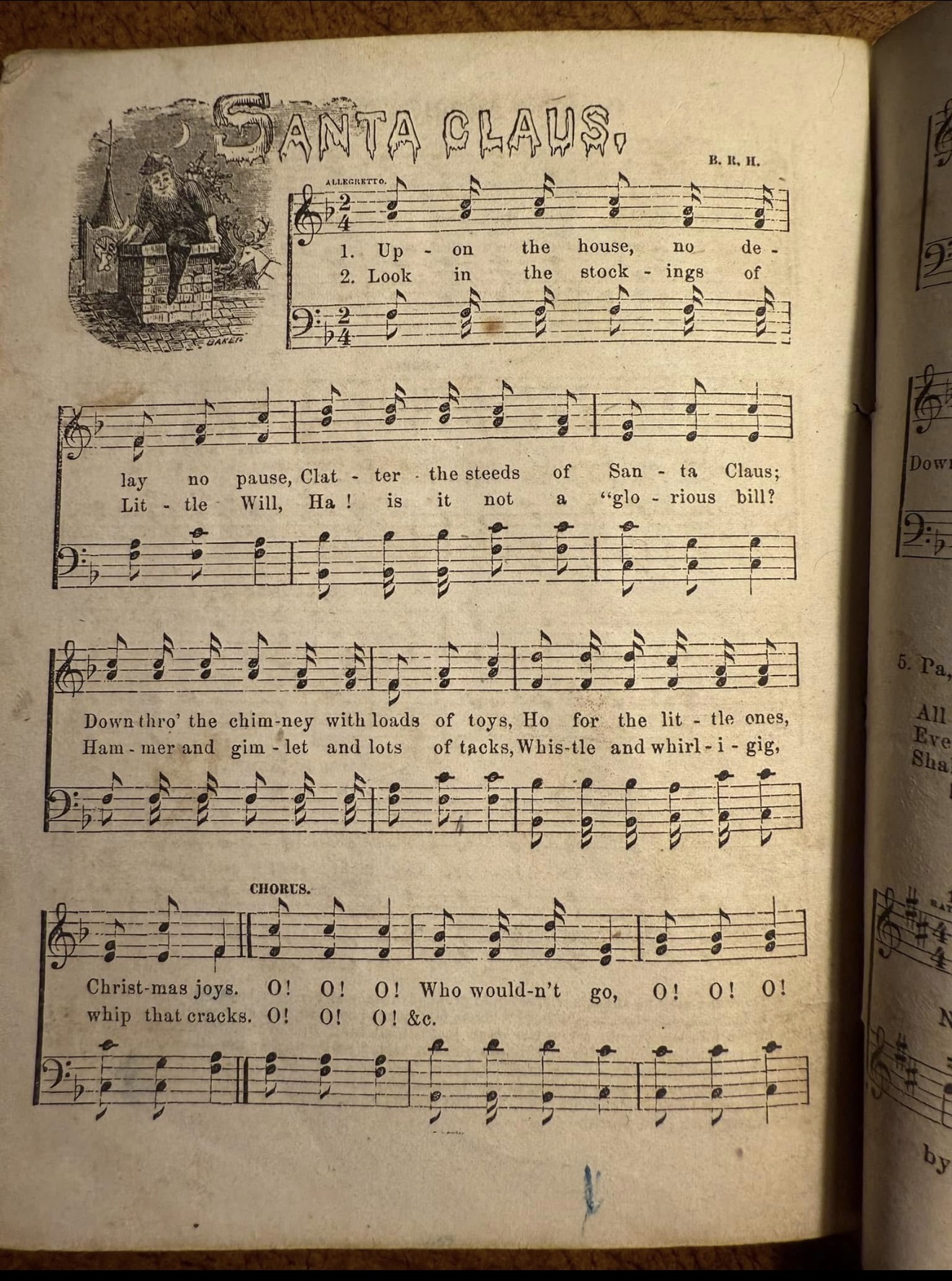
First publication of Benjamin Hanby’s Christmas song “Santa Claus”, now known as “Up on the Housetop”
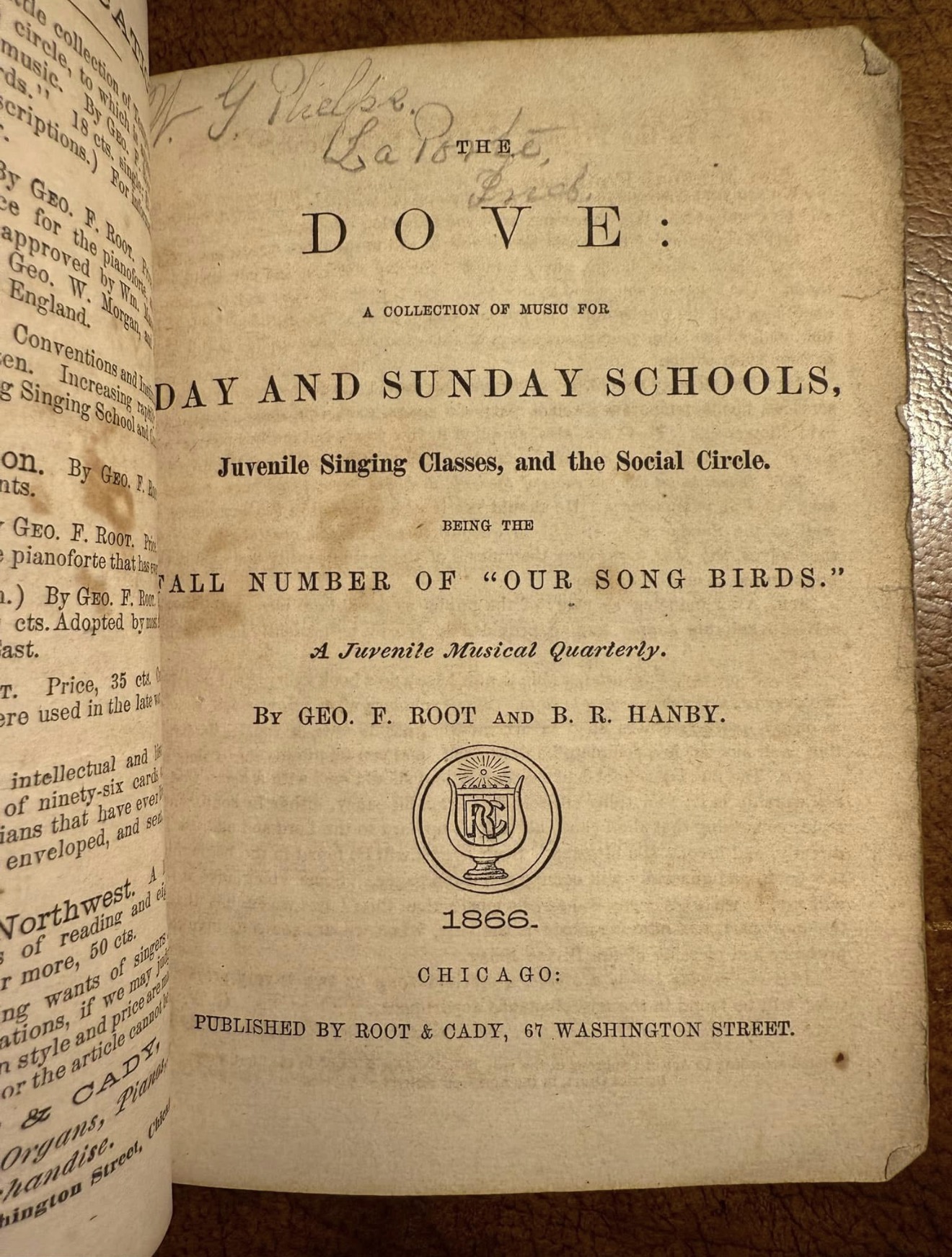
The Turner House Collection preserves an original copy of The Dove, the fourth number of Our Song Birds, a juvenile musical quarterly edited by George F. Root and Benjamin R. Hanby and issued by Root & Cady of Chicago in October 1866. Within this fragile illustrated booklet appears Hanby’s “Santa Claus,” credited “B. R. H.” The song’s opening verse and rooftop refrain became the familiar “Up on the Housetop.” Published during Hanby’s lifetime, the issue is recognized as the song’s first appearance in print. Its original pictorial wrappers, title page, musical notation, and surviving handwritten ownership marks make the volume an unusually direct witness to the history of the song. For the Collection, the publication links the career of a songwriter born in Rushville to the national history of American Christmas music.
Original title page, 1866.“Santa Claus,” first music page.
Object details: Printed music in original illustrated wrappers; 1866. The ownership inscriptions and full physical collation are being documented.
Two sacred images, an elaborate metal frame and an apparently sealed case. Explore the investigation of the Collection’s two-sided Catholic devotional pendant, acquired in 2023. Read the pendant research story.
Object photographs, detailed catalogue records, and research essays will be added as documentation and image permissions are prepared. The collection is privately held and is not open for public tours.