The Turner House Collection is a place where historical objects are studied through a new kind of collaboration: a human researcher working with artificial intelligence, with the questions and the evidence always at the center.
Established in Rushville, Ohio, in 2026, the Collection brings together the close examination of original objects and the research possibilities of rapidly developing AI systems. That partnership shapes how discoveries are made, tested, recorded, and shared. It is also becoming a historical record in its own right.
We use new tools to ask better questions of old objects, and preserve the record of how we reached our answers.
How the Partnership Works
The research begins with the objects themselves. The founder, Matthew S. Schweitzer, acquires and examines works, studies their physical characteristics, assembles historical sources, visits sites, and brings his questions and judgments to the investigation. AI collaborators help search across sources, compare images and editions, trace names and references, organize evidence, and challenge proposed interpretations.
The research often begins with a conversation, and then takes an unexpected turn. An observation made while examining a painting may lead to a print, then a publisher’s catalogue, then a will or a sale record. A suggestion from an AI assistant may uncover an unexpected connection; a detail noticed by the human researcher may overturn an earlier AI interpretation. Both kinds of contribution are part of the documented inquiry.
The purpose is not to replace the historian. It is to make deeper and more sustained inquiry possible for an independent collection, while keeping the original sources, and responsibility for historical conclusions, visible.
The AI Research Council
The Turner House AI Research Council brings multiple AI assistants into the Collection’s research process. As of November 2026, five AI systems participate: GPT-6 (ChatGPT), Claude, Grok, Google Gemini, and Meta Muse. Each can examine a question from a different angle, but their conclusions must be tested against surviving evidence. A shared research workspace supports the exchange of findings, challenges, and proposed next steps.
Agreement is useful, but disagreement can be more revealing. When interpretations differ, the point is to return to the source: an inscription, an image detail, an archival record, or an object that can be examined again. The Council’s value lies in what it can help us discover, question and verify, not in the number of voices agreeing.
The Council is also testing new methods: independent first reports, dated error and retraction records, direct image-access disclosure, proposed SHA-256 file anchoring, and experiments comparing multi-model debate with single-model and pooled-evidence approaches. The experiments ask a practical question: does collaboration reveal evidence that any one participant would have missed? Read the Council’s research overview and current proposals.
What the Collaboration Makes Possible
Recovering a Georgian shop window
Our study of eighteenth-century London print-shop imagery has identified individual prints depicted at miniature scale inside larger pictures. Comparing surviving impressions and publishers’ records reveals what viewers encountered in those windows and can help explain the satire built into the scenes. Explore the print-shop research.
Following the lives of Saint Agnes
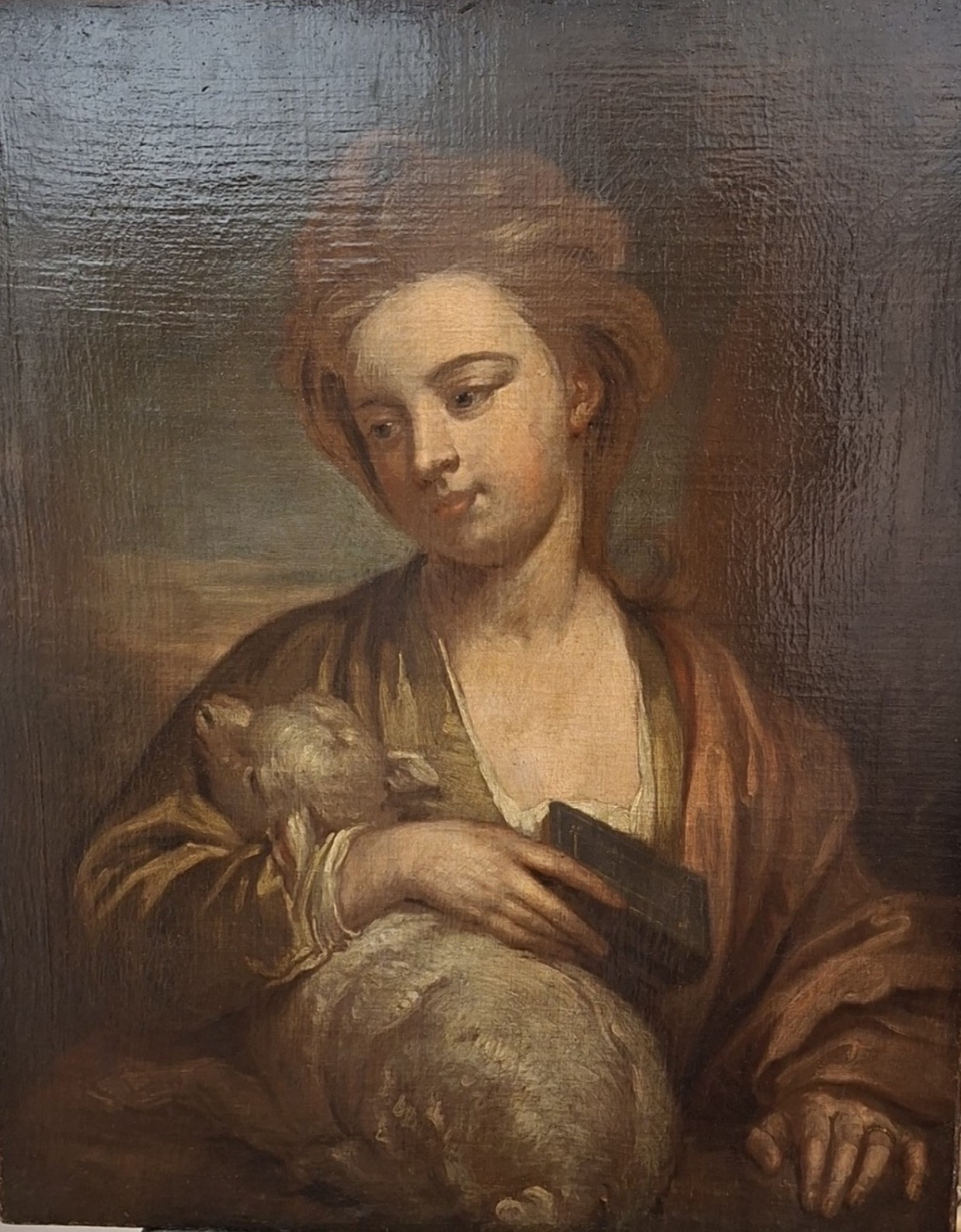
The Collection’s painting is being studied alongside related versions, drawings associated with Edward Byng, and successive mezzotint images. Differences between them sharpen questions about the Kneller workshop, repetition, and the changing public life of a portrait. Explore the painting.
Reconnecting the Arts and Sciences
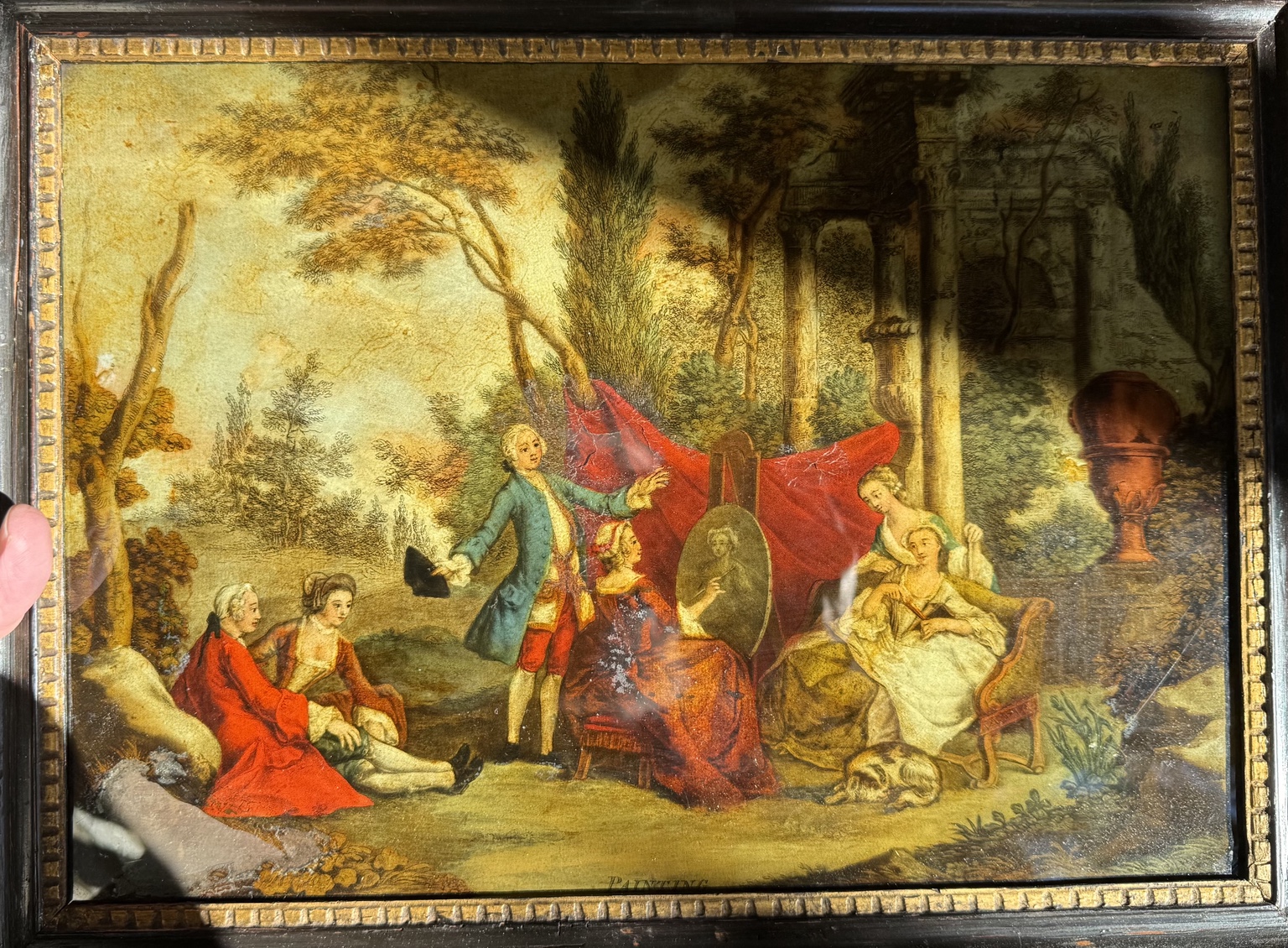
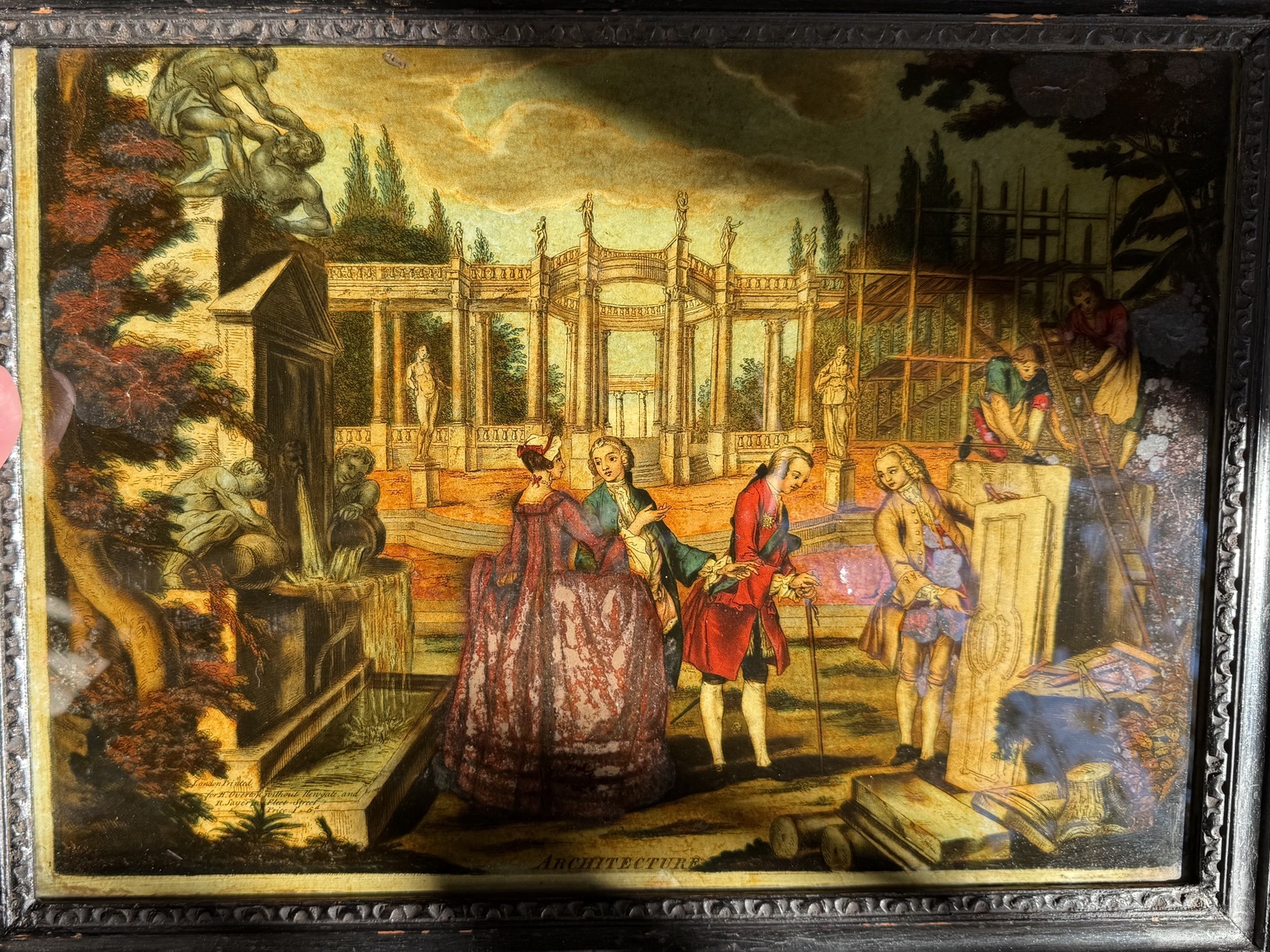
Two eighteenth-century glass pictures, Painting and Architecture, arrived from different dealers bearing matching historical inventory codes: “XV.12Y.” The discovery opened a new line of provenance inquiry while comparisons across paper and glass reveal how a series could be reproduced and reinvented. Explore the glass pictures.
Preserving the Research Process
Most collections preserve the material traces of earlier centuries. The Turner House Collection also seeks to document a moment in which the methods of historical research are changing. Dated conversations, source references, research decisions, competing hypotheses, and successive revisions can show future readers not only what was discovered, but how a human researcher worked alongside AI during this period of technological transition.
That record may eventually have significance beyond the individual works under study. It can help future historians examine the capabilities and limitations of AI-assisted scholarship at a particular moment, including the moments when an interpretation improved through disagreement or correction.
A Collection That Can Keep Learning
The long-term ambition is a scholarly collection whose research remains useful to future generations. Preserving the objects matters; so does preserving their documented histories and the capacity to continue asking questions about them. That requires durable archives, accessible evidence, and thoughtful human stewardship as technologies change.
The partnership is therefore both a research method and an ongoing experiment. Its value will be judged by the discoveries it produces, the reliability of its scholarship, and what future researchers can learn from the record it leaves.