OBJECT STORIES · NO. 01
The Persistence of
the Personal Portrait
From Painted Figure to Photograph, 1660s–1860s
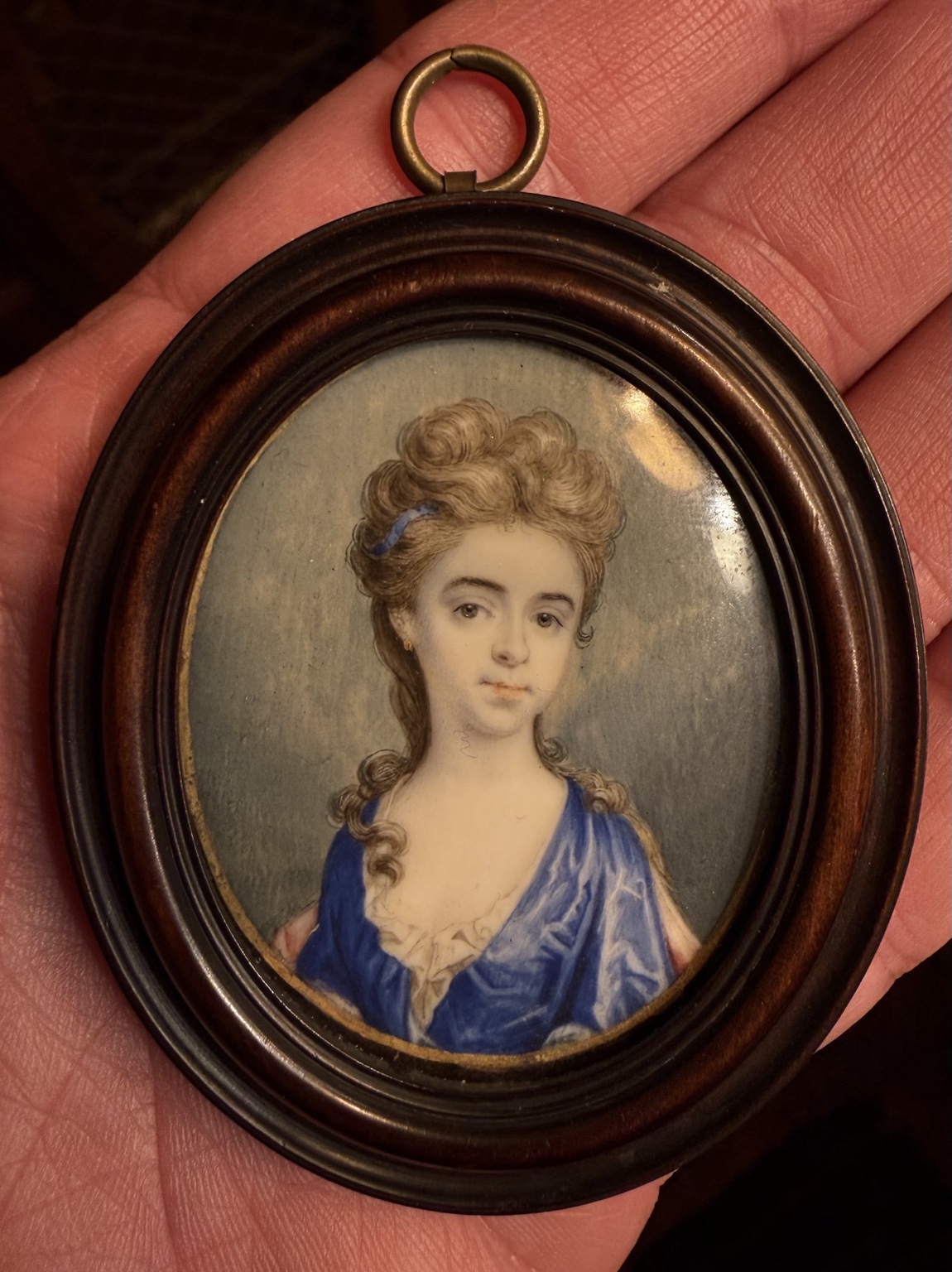
The Turner House Collection holds a fascinating group of painted portrait miniatures and early photographic portraits. Studied individually, these objects tell us about particular sitters, materials and techniques. Viewed together, they reveal how one form of portraiture developed alongside, and eventually gave way to, another.
The examples below, all from the collection, span the 1660s to the 1860s. Their connections are sometimes technological, sometimes physical: an oval frame, a suspension ring, a locket designed to contain more than one likeness. Such details help reconstruct how portraits were made, displayed and kept.
Photography introduced a new way to make a portrait, but it did not require a new way to display one.
The miniature attributed to Christian Richter, painted around 1705, is an individual likeness worked in watercolour on vellum. Its small scale demanded close looking. Portrait miniatures could be set into jewellery, carried in cases, or displayed in frames; their settings were part of how they were used and understood.
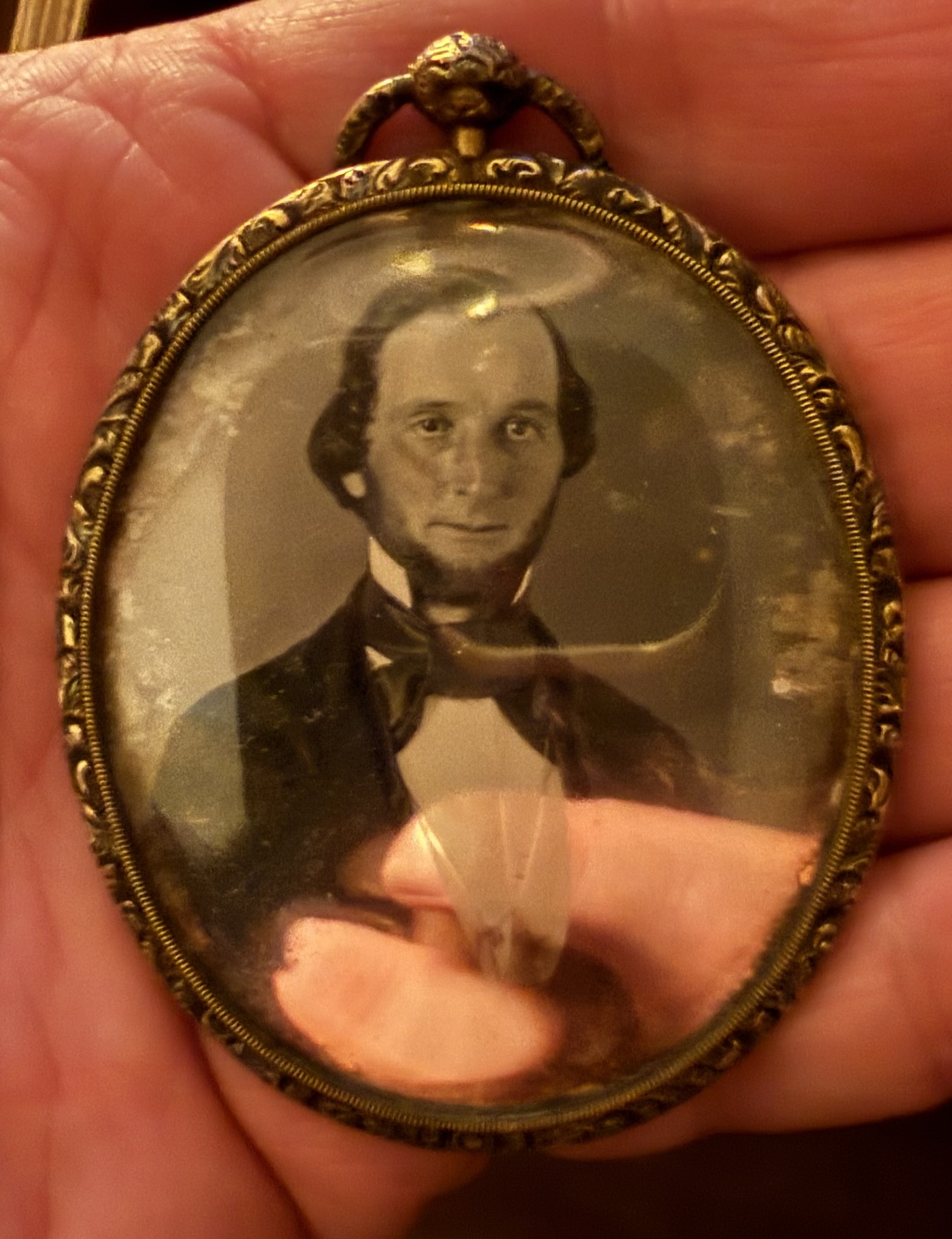
After the public introduction of photography in 1839, portraits made by the daguerreotype process began to occupy some of the same physical forms. Named for its inventor, Louis Daguerre, a daguerreotype is an early photograph made by exposing a sensitized silver-coated copper plate in a camera and developing the resulting image. The gentleman’s portrait shown here is housed in an oval gilt-metal pendant. Unlike a painted miniature, the resulting photograph was a direct image on metal, generally unique rather than printed from a reusable negative.
Placed beside the Richter miniature, the pendant makes that continuity visible. The two portraits differ in medium and date, yet both occupy carefully finished oval settings. The comparison becomes more revealing when other objects from the collection are brought into view: a pair of seventeenth-century painted miniatures attributed to Richard Gibson in matching frames, and a folding photographic locket containing four individual portraits.
Attributed to the English miniaturist Richard Gibson (c. 1615–1690) and dated to about 1660 in the collection catalogue, these two watercolour portraits on vellum depict a fair-haired gentleman in a dark coat and white collar and a woman dressed in black with a pearl necklace. Each miniature measures approximately 39 mm high. The portraits appear to represent a husband and wife, although neither sitter has been identified and their relationship remains unconfirmed. According to the collector’s recollection, Philip Mould considered the portraits unusually personal in character and suggested that the sitters may have been friends or relatives of Gibson. This is an intriguing possibility, not an established identification. He also proposed that the miniatures might originally have been housed together in a locket, before being separated into their present matching black octagonal frames with suspension rings. The original setting and the date of any reframing remain unknown.
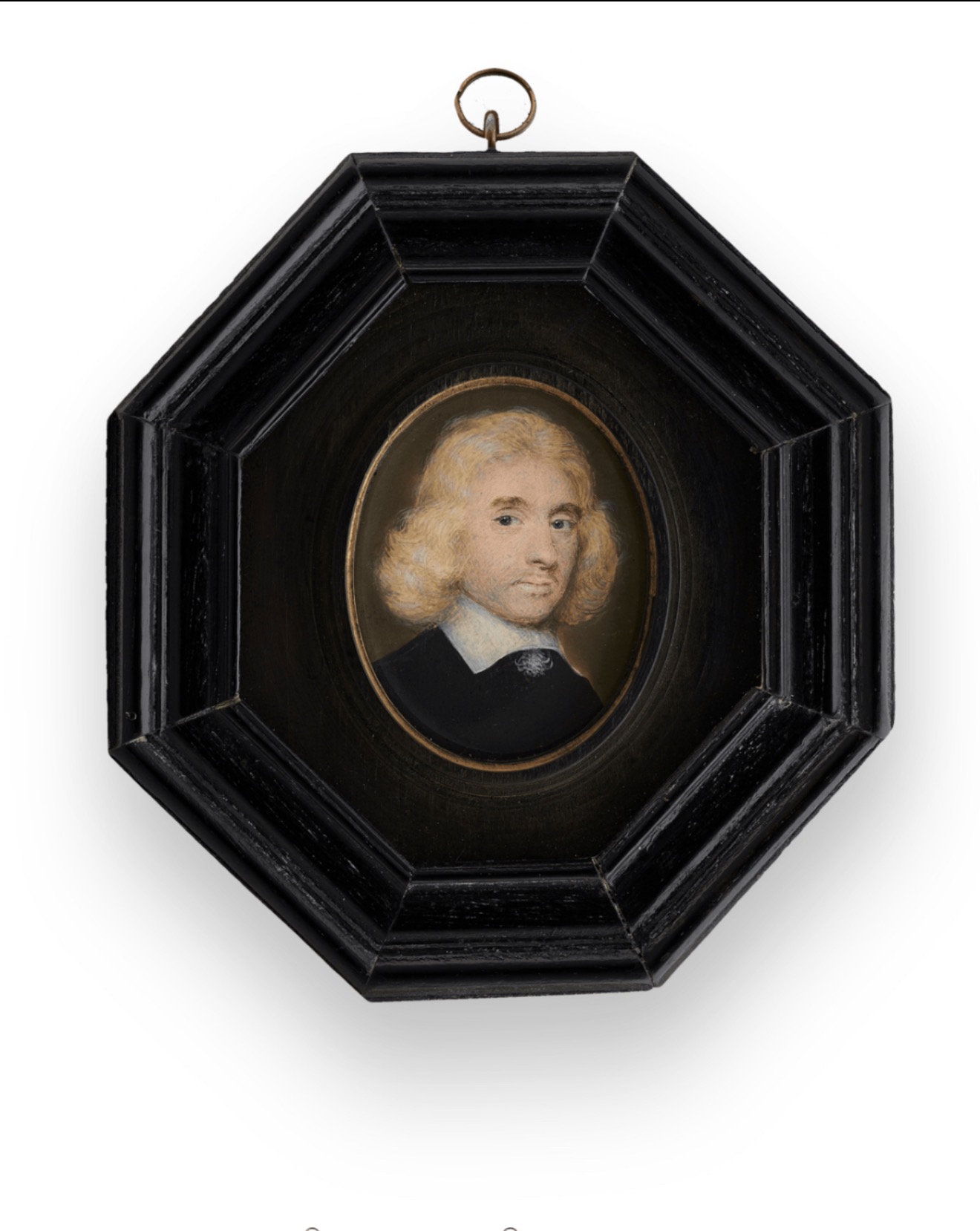
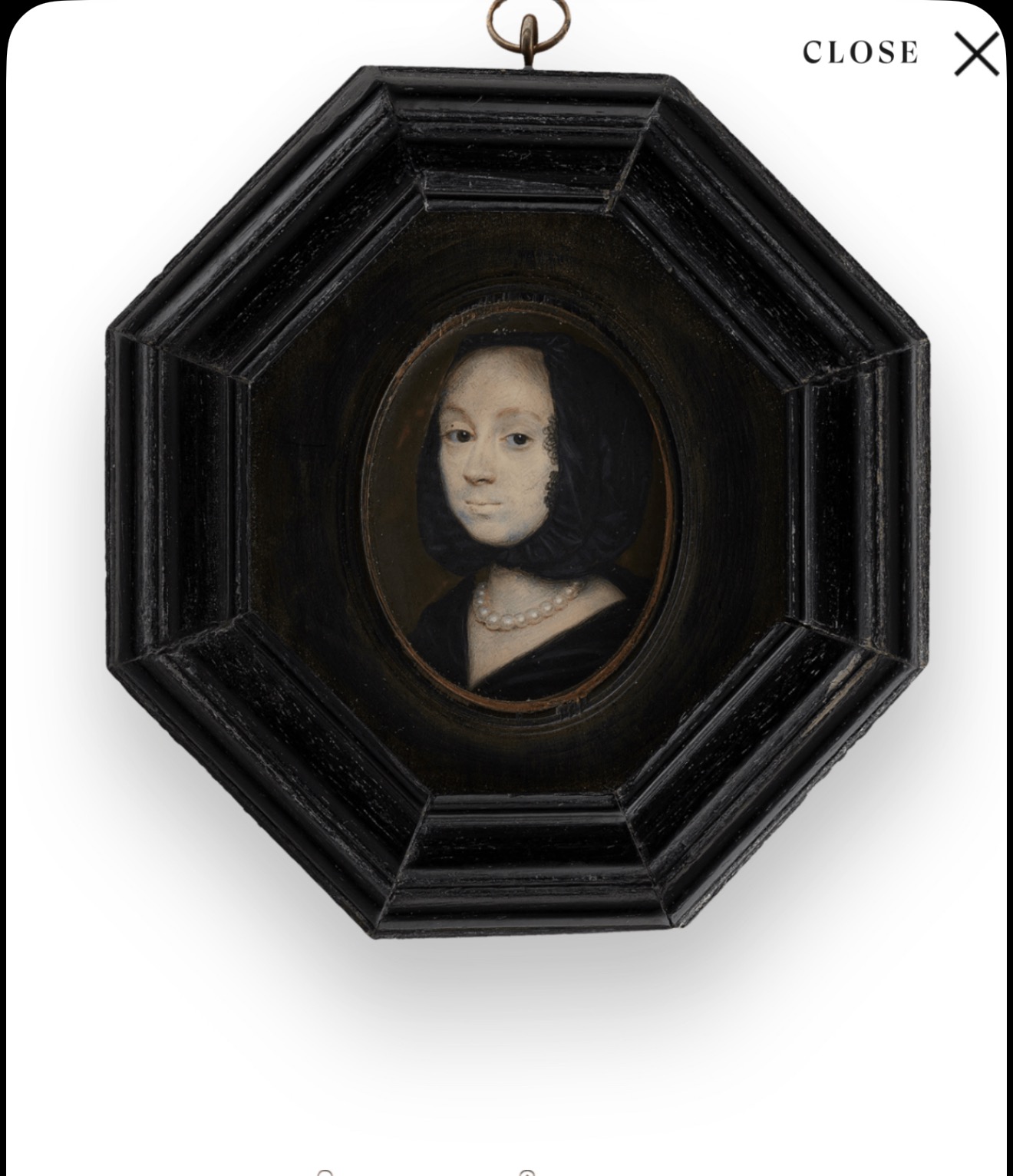
For roughly three and a half centuries, these two portraits have remained together. Their names have vanished from the record. Their faces have not. Although we may never know who these individuals were, their survival together offers a touching reminder of the personal relationships that such portraits were created to preserve. Seen alongside the Richter miniature and the photographic lockets, they also show how intimate portraits could move between settings without necessarily losing their personal significance. The nineteenth-century daguerreotype entered this much older culture of keeping likenesses close.
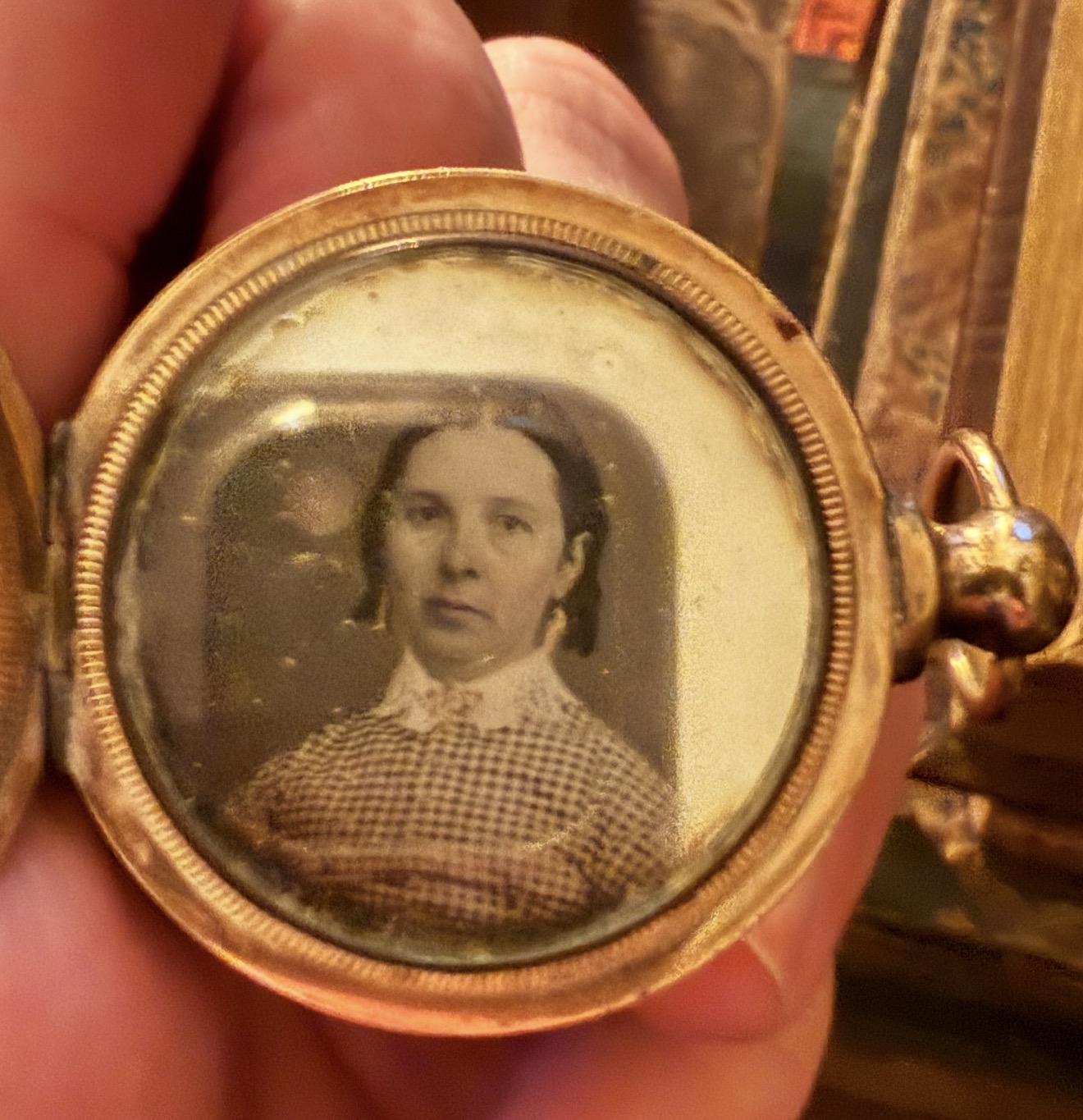
The woman pictured here wears a patterned dress and a high, pale collar. Her daguerreotype is one of four housed in the same folding locket. The other images show a man, a boy and a girl, an arrangement strongly suggestive of a husband, wife and their two children, although none of the sitters has yet been identified and their relationships remain unverified.
Unlike a conventional family portrait, the locket brings together four separately made likenesses within a single object. Its owner could open the case to view each face in turn. The arrangement offers a particularly revealing example of how early photography was adapted to an older tradition of miniature portraits: individual images assembled into a portable, personal record of a family.
Together, these works show why a collection can reveal more than a sequence of isolated portraits. The painted miniatures establish the conventions of scale, framing and personal use; the daguerreotypes show those conventions continuing in a new medium. Their historical relationship emerges most clearly when the objects are examined side by side.